
- Home
- Roofing Manufacturers
- Sika Sarnafil Roofing Systems in Las Cruces, NM
Roofing Manufacturers
Sika Sarnafil Roofing Systems in Las Cruces, NM
Sarnafil's Long-Running PVC Track Record
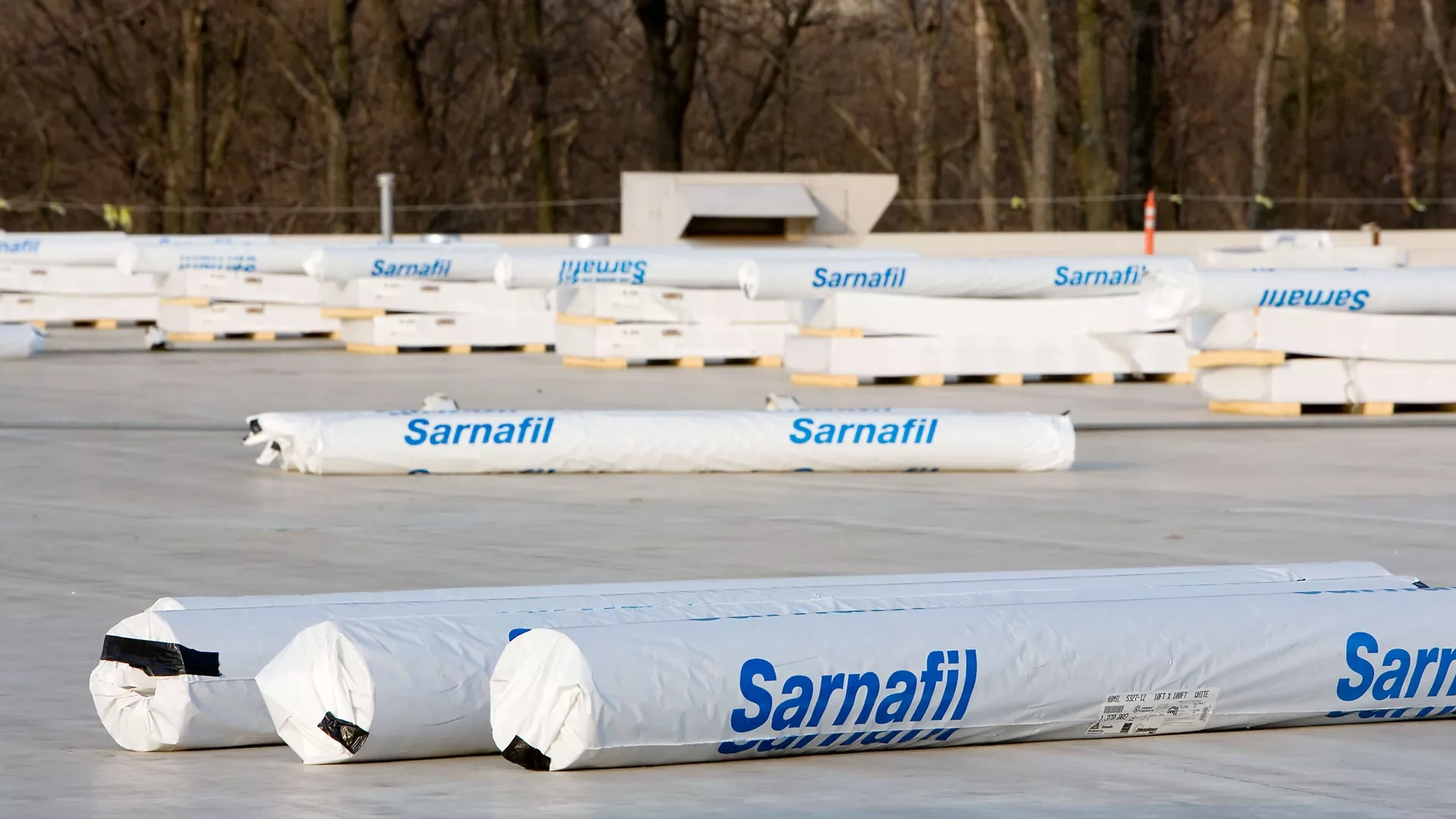
Sarnafil is one of the oldest continuously produced PVC roofing brands in the industry, now part of Sika, the Swiss building-materials manufacturer. Its long field history is the main reason it comes up in conversations with owners who want a membrane with decades of documented performance behind it, especially on buildings meant to stay in service for a long time.
Reinforced PVC With a Documented History
Sarnafil membranes have installations dating back decades that are still in service in various parts of the country, which is well documented within the roofing industry and gives us real long-term data to point to rather than manufacturer projections alone. That track record matters most to owners planning for a very long ownership horizon on a building.
The membrane's reinforced PVC construction heat-welds the same way other PVC products do, and we apply the same probe-and-verify process to every Sarnafil seam we install.
Sarnafil's polyester scrim reinforcement, standard across most of the line, adds dimensional stability that helps the membrane resist the pull and stretch that comes with repeated thermal cycling on our wide daily temperature swings.
That reinforcement also helps the membrane resist tearing at fastener plates and edges, which matters on buildings in more exposed wind categories around the open industrial parks outside the city core.
Plasticizer Retention and UV Aging
PVC's long-term flexibility depends heavily on how well the membrane retains its plasticizer content over years of heat and UV exposure - a known aging factor across the PVC category generally. Sarnafil's formulation is designed to retain that flexibility longer than older-generation PVC products, which is relevant here given how much UV load this elevation delivers year-round.
We still watch flashing and detail work on any PVC roof, Sarnafil included, since even a well-formulated membrane depends on correct installation at penetrations and terminations to perform to its potential lifespan.
Older PVC roofs from decades past sometimes show visible brittleness at flashings and corners as an early plasticizer-loss symptom, which is one of the specific things we check for on any legacy PVC roof we're asked to inspect or service, regardless of which manufacturer originally installed it.
Chemical Resistance for Processing Buildings
Like other PVC membranes, Sarnafil resists grease and chemical exposure better than TPO or EPDM, which makes it a candidate on food processing and dairy-adjacent buildings around the valley's ag corridor where exhaust and vapor exposure would degrade a different membrane chemistry faster.
We ask specifically about exhaust type and frequency before recommending any PVC product, Sarnafil included, since a light-exposure kitchen and a heavy-duty processing line don't necessarily need the same membrane thickness or reinforcement level.
For an owner comparing PVC brands specifically for a chile processing or dairy facility, we lay out Sarnafil's chemical-resistance data sheet alongside Carlisle's and JM's PVC offerings so the comparison is concrete rather than a name-brand assumption.
Reflective Color Options
Sarnafil is available in reflective colors that help manage surface heat gain, which we factor into any recommendation given how much solar load a roof here absorbs across a cloudless calendar most of the year.
White and light gray both show up regularly in our Sarnafil bids, and the reflectivity difference against a darker membrane is noticeable in surface temperature readings we've taken on comparable roofs during summer inspections.
- Long-term flexibility formulation compared against other PVC manufacturers at bid
- Weld quality verified by probe on every seam, same discipline across all PVC brands
- Chemical exposure source identified before recommending PVC over TPO
- Reflective color option selected for this building's heat gain profile
- Flashing and termination detail reviewed regardless of membrane brand
- Warranty terms compared directly against other manufacturers
How Sarnafil Compares at Bid Time
We price Sarnafil against Carlisle's Sure-Flex, GAF's EverGuard PVC, and JM's KEE-based PVC line depending on the job, since all four are legitimate options for a grease or chemical-exposure building. The deciding factors are usually warranty terms, specific formulation, and cost rather than brand name alone.
Sika's broader building-materials catalog beyond roofing membranes sometimes comes up when a project also involves concrete waterproofing or sealants elsewhere on a property, though that's a separate conversation from the roofing membrane selection itself.
We put the actual comparison numbers in front of an owner rather than leaning on brand reputation alone, since warranty length and cost can shift the recommendation even when the underlying chemical-resistance performance is similar across manufacturers.
What Owners Ask About Sarnafil PVC
Is Sarnafil more expensive than other PVC brands?
Pricing is generally comparable to other major PVC manufacturers, though we quote the specific product line against alternatives at bid time rather than relying on a general assumption.
How long has Sarnafil PVC been used in commercial roofing?
The brand has one of the longest continuous histories in the PVC roofing category, with documented long-service installations dating back several decades.
Does Sarnafil hold up better against UV than other PVC brands?
Sarnafil's formulation is built for long-term plasticizer retention, which supports flexibility over time, though correct installation and detailing matter as much as membrane chemistry for actual field performance.
Is Sarnafil a good fit for a chile processing building?
PVC generally, including Sarnafil, resists grease and chemical exposure better than TPO or EPDM, making it a reasonable option to evaluate for that kind of exposure.
Can Sarnafil be installed over an existing roof without a full tear-off?
In some cases a recover is possible if the existing substrate is sound and dry, though that determination is made per building after an assessment.