
- Home
- Commercial Project Types
- Hotel and Hospitality Roofing in Las Cruces, NM
Commercial Project Types
Hotel and Hospitality Roofing in Las Cruces, NM
Roof Work That Doesn't Show Up in a Guest's Review
Hotels along the I-10 corridor and near Mesilla's tourist draw run on occupancy and reputation in a way most commercial buildings don't - a single bad guest review mentioning roof noise or a leak-stained ceiling tile can cost a property more than the repair itself. We plan hotel roof work with that reputational exposure in mind from the first walk-through.
Guest Noise Tolerance Is the Central Constraint
A guest paying for a night's stay has a much lower tolerance for overhead noise than an office tenant does during business hours, and that tolerance doesn't improve just because the work is scheduled for daytime. We sequence tear-off and mechanical fastening away from occupied guest room wings whenever occupancy allows, and we coordinate closely with front desk and housekeeping on which rooms are booked on any given work day.
For properties that can't avoid working above occupied rooms, we compress the loudest phase into the shortest possible window and communicate specific timing to the front desk so staff can set guest expectations proactively instead of fielding surprise complaints.
Housekeeping schedules also factor into our planning. Rooms get serviced on a rolling basis throughout the day, and staging equipment or materials in a hallway during that window can slow housekeeping down as much as it slows guests. We coordinate directly with the housekeeping supervisor on corridor access before setting a daily work plan.
Pool Decks, Porte-Cocheres, and Guest-Facing Roof Areas
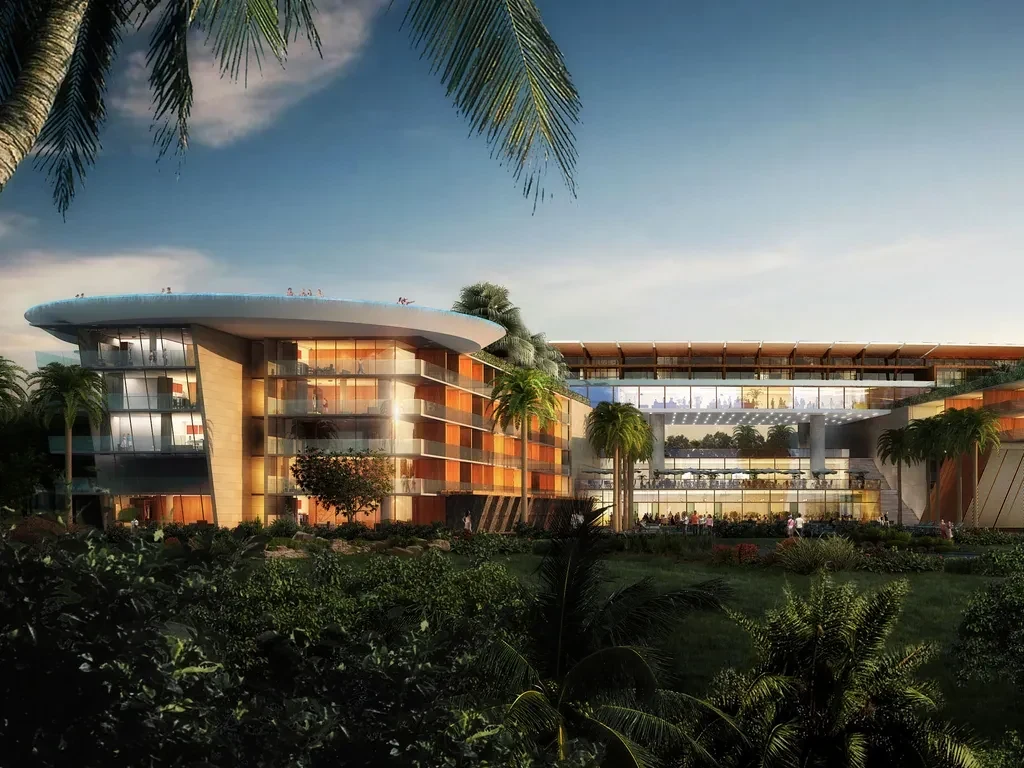
Hotels carry more architectural roof detail in guest-facing areas than a typical commercial building - porte-cochere canopies at the entrance, pool cabana and pavilion roofs, and covered walkway connections between buildings all need flashing work that's visible to arriving guests, not tucked away on a back roof nobody sees. We hold guest-facing roof sections to a cleaner finish standard than a warehouse roof, since these areas are part of the property's first impression.
Pool deck roof structures also deal with chlorine and humidity exposure that accelerates certain membrane and flashing degradation compared to a standard roof section, and we account for that in material selection on those specific areas.
Exterior corridor and breezeway roofs at motor-court style properties see heavier foot traffic than an interior roof deck ever would, since guests walk those corridors directly beneath the roof edge on their way to parking. We check fascia and edge metal condition on these sections more frequently than we would on an interior roof plane, since loose edge metal at eye level is both a safety issue and a visible defect guests notice immediately.
- Roadside and interstate-corridor limited-service hotels
- Extended-stay properties with kitchenette exhaust penetrations
- Full-service hotels with conference and banquet space roofs
- Pool cabana, pavilion, and porte-cochere structures
- Boutique properties near Mesilla's historic district
- Attached restaurant and banquet kitchen roof sections
Low-Occupancy Season Scheduling
Hotel occupancy in this market shifts with the seasonal travel pattern, and properties generally know their own slower stretches better than a general regional average would predict. We build the project calendar around each property's actual booking data rather than a generic assumption, since a slow month for a business-traveler hotel near the interstate looks different from a slow month for a property near Mesilla's tourist draw.
Where a full reroof can't wait for a slow season, we phase the work wing by wing so occupied and available inventory stays split, letting the front desk keep booking rooms in sections not under active work.
Kitchen Exhaust and Banquet Facility Roof Loads
Full-service hotels with restaurant or banquet operations carry grease exhaust penetrations similar to a standalone restaurant, and those need the same grease-rated flashing detail we'd use on any commercial kitchen roof. We treat these penetrations as their own inspection category on a hotel property rather than folding them into a general HVAC review.
Banquet and conference space also tends to carry heavier rooftop HVAC load for large-group climate control, and we sequence any work near those units around the property's event calendar when we can get visibility into it.
Ballroom roof sections spanning large clear widths without interior columns also deserve extra deflection checks, since a sagging deck over a banquet hall shows up as visible ponding faster than the same deflection over a standard guest room wing with more frequent structural support underneath.
Questions From Hotel Facilities and GM Teams
Can you work around a fully booked property?
We can, though we'll always ask for occupancy visibility to plan the loudest phases around whatever rooms are unoccupied that week, minimizing guest impact where possible.
How do you handle roof work near the pool or entrance canopy?
We hold guest-facing areas to a cleaner finish standard and account for chlorine and humidity exposure in material choice for pool deck structures specifically.
Will you work around our event and banquet calendar?
Yes, when we have visibility into it. We sequence work near banquet-serving HVAC units around scheduled events whenever the property shares that calendar with us.
Can a reroof be phased so we don't lose inventory all at once?
Yes. We phase larger hotel reroofs wing by wing specifically so the front desk can keep booking available sections while other wings are under work.
Do kitchen exhaust penetrations need special treatment on a hotel roof?
Yes, the same grease-rated flashing detail we'd use on a standalone restaurant applies to any hotel with an active kitchen or banquet exhaust system.