- Home
- Commercial Roofing Services
- Commercial Roof Coatings in Las Cruces
Commercial Roofing Services
Commercial Roof Coatings in Las Cruces
Acrylic Coatings for Steady-Slope Roofs That Just Need UV Protection
A coating recommendation starts with adhesion, moisture, drainage, membrane condition, detail preparation, and warranty eligibility-not every existing roof is a restoration candidate. When a roof drains well and doesn't have a ponding problem, acrylic gives us a lower-cost way to restore reflectivity and add a protective UV layer without paying for silicone's ponding resistance the roof doesn't need. This page covers where acrylic fits in our coating recommendations around Las Cruces and how we apply it for this climate.
Matching the Coating to the Roof's Actual Drainage
The decision between acrylic and silicone comes down almost entirely to drainage. A roof with positive slope, functioning drains, and no history of standing water is a good acrylic candidate -- the coating does its job of UV protection and reflectivity restoration without ever facing the sustained moisture exposure that breaks acrylic down. A roof that ponds after every monsoon storm needs silicone instead, and we say so rather than selling the cheaper option where it won't hold up.
We check drainage history the same way for every coating job -- staining patterns, debris rings, drain condition -- and let that assessment drive the material recommendation rather than starting from price.
UV Protection and Reflectivity in This Climate
Acrylic coatings reflect a high percentage of solar energy when properly applied, which matters given how many hours of direct sun a roof surface here takes through the year. On aging metal roofs especially, an acrylic coating restores a chalked or faded finish and adds a fresh reflective layer that cuts rooftop temperature and, in turn, cooling demand on the building below.
We see the clearest payoff on retail and office buildings where the HVAC system runs hard through summer and any reduction in rooftop heat gain shows up directly in equipment run time.
Where We Recommend Acrylic
Acrylic works well across a range of well-drained roof types, and cost makes it the practical choice on larger roof areas where silicone's premium price adds up fast without a matching performance need.
- Steep or well-sloped metal roofs with good drainage
- Well-drained TPO or EPDM membranes without ponding history
- Larger roof areas where cost per square foot matters most
- Aging asphalt shingle or built-up roofs needing UV renewal
- Buildings prioritizing cooling-cost reduction over ponding resistance
- Maintenance recoating on a roof coated with acrylic previously
Application Timing Around Monsoon Season
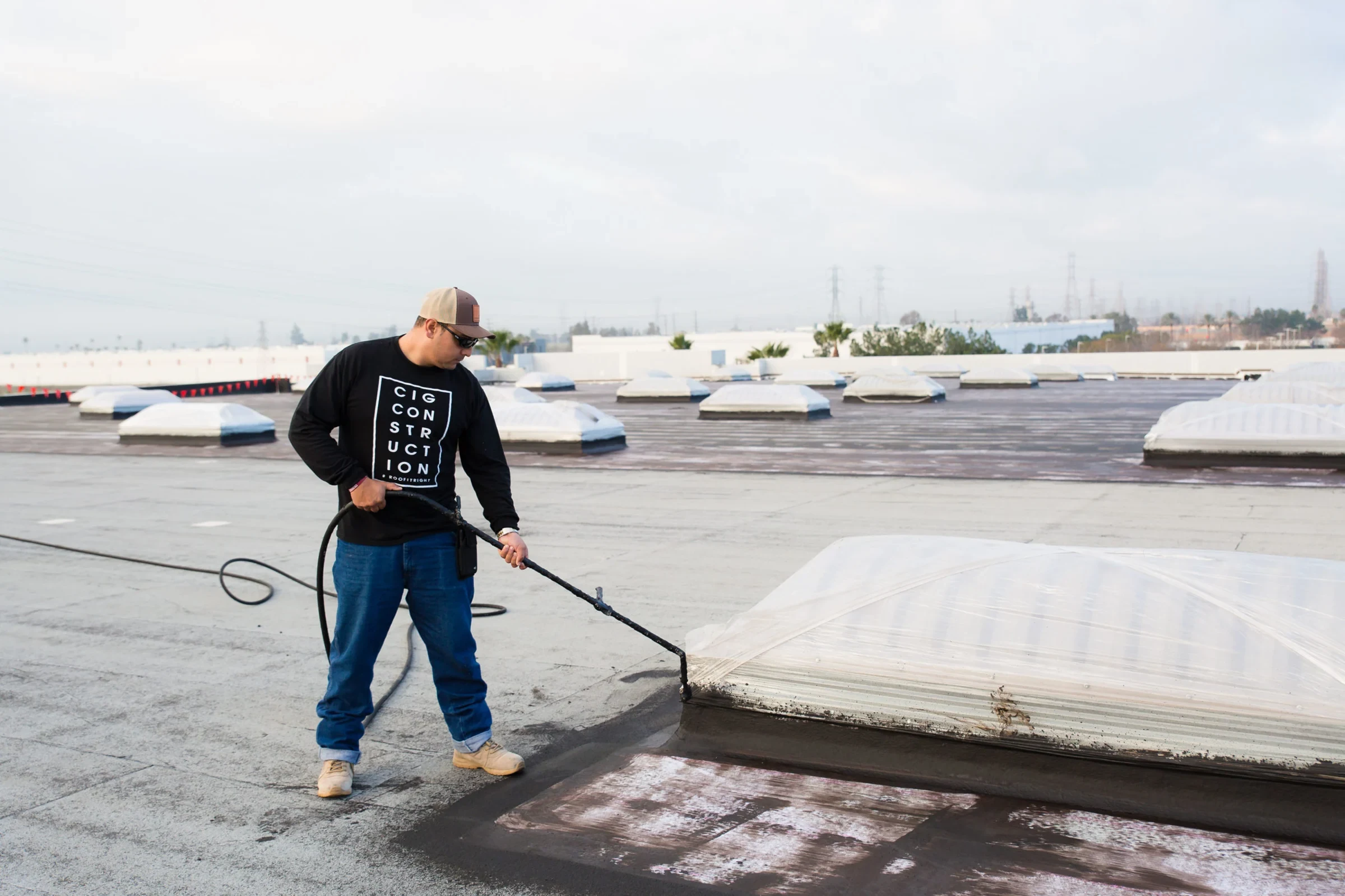
Acrylic coatings are water-based and need dry cure time before they can handle rain, which makes monsoon season a scheduling challenge on any roof without a clear multi-day dry window. We track forecasts closely and plan acrylic application for the shoulder months when we can, holding it for a confirmed dry stretch when monsoon timing is the only option.
A coating that gets rained on before it cures can wash or blister, which means redoing work that was already paid for. We'd rather push a start date a few days than gamble on a forecast that's wrong more often than not during peak monsoon weeks.
Surface temperature matters too. Applying acrylic on a roof surface that's running well above ambient air temperature during a summer afternoon can affect cure quality, so we favor early morning application windows during the hottest months rather than fighting midday roof-surface heat.
Wind is a secondary factor during application. A gusty pre-monsoon afternoon can carry overspray further than expected, so we watch conditions the same day we're spraying rather than relying solely on a morning forecast check.
Adjacent vehicles, HVAC intakes, and parked equipment all need to be accounted for on any coating day, and on a busy commercial site with tenants coming and going, that's a coordination step we handle before spray equipment ever gets turned on.
We walk the perimeter with the facilities manager before we start so anything sensitive nearby -- signage, exterior finishes, parked fleet vehicles -- gets protected or moved ahead of time rather than dealt with after the fact.
Maintenance Recoating vs. One-Time Application
Acrylic coatings aren't a one-and-done fix -- they wear under UV exposure and eventually need a maintenance recoat to keep reflectivity and protection at full strength. We build that expectation into the conversation up front, and for owners managing multiple buildings, a scheduled recoat cycle across a portfolio is often more cost-effective than waiting for individual roofs to visibly degrade before addressing them.
Common Questions About Acrylic Coatings
How is acrylic different from silicone coating?
Acrylic costs less but doesn't tolerate standing water the way silicone does. It's the right call on well-drained roofs and the wrong call on anything with a ponding history.
Can acrylic go over an existing metal roof?
Yes, and it's one of the more common applications we see -- restoring reflectivity on aging metal panels that have chalked or faded under UV exposure.
How often does an acrylic coating need to be reapplied?
It depends on exposure and the specific product, but plan on a maintenance recoat cycle rather than treating it as permanent. We can set a recommended interval during the initial application.
Will acrylic coating hold up through monsoon season once cured?
Yes, once fully cured it handles normal monsoon rainfall well. The vulnerability is during the cure window before application, which is why timing matters so much.
Is acrylic a good option for a roof we're not sure will drain well?
Not without checking first. If there's any question about drainage, we recommend silicone instead so the coating doesn't fail prematurely under ponding it wasn't designed for.