

- Home
- Commercial Project Types
- Higher Education Roofing in Las Cruces, NM
Commercial Project Types
Higher Education Roofing in Las Cruces, NM
Roofing for College and Research Buildings on an Academic Calendar
The University Avenue corridor and the streets around it carry a dense mix of academic, research, and student-support buildings, all running on a schedule that has nothing to do with roofing convenience. Facilities staff at these properties answer to deans, lab directors, and housing coordinators at the same time, and a roof job that ignores finals week or move-in weekend creates problems well beyond the deck.
Why Institutional Roofs Age Differently Here
A lot of the low-slope stock near campus was built in phases over decades, which means one building can carry three or four roof systems stacked against each other at parapet transitions. We map those transitions before we quote anything, because a patch that ignores an old built-up section hidden under a newer modified bitumen cap will fail at the seam within a season.
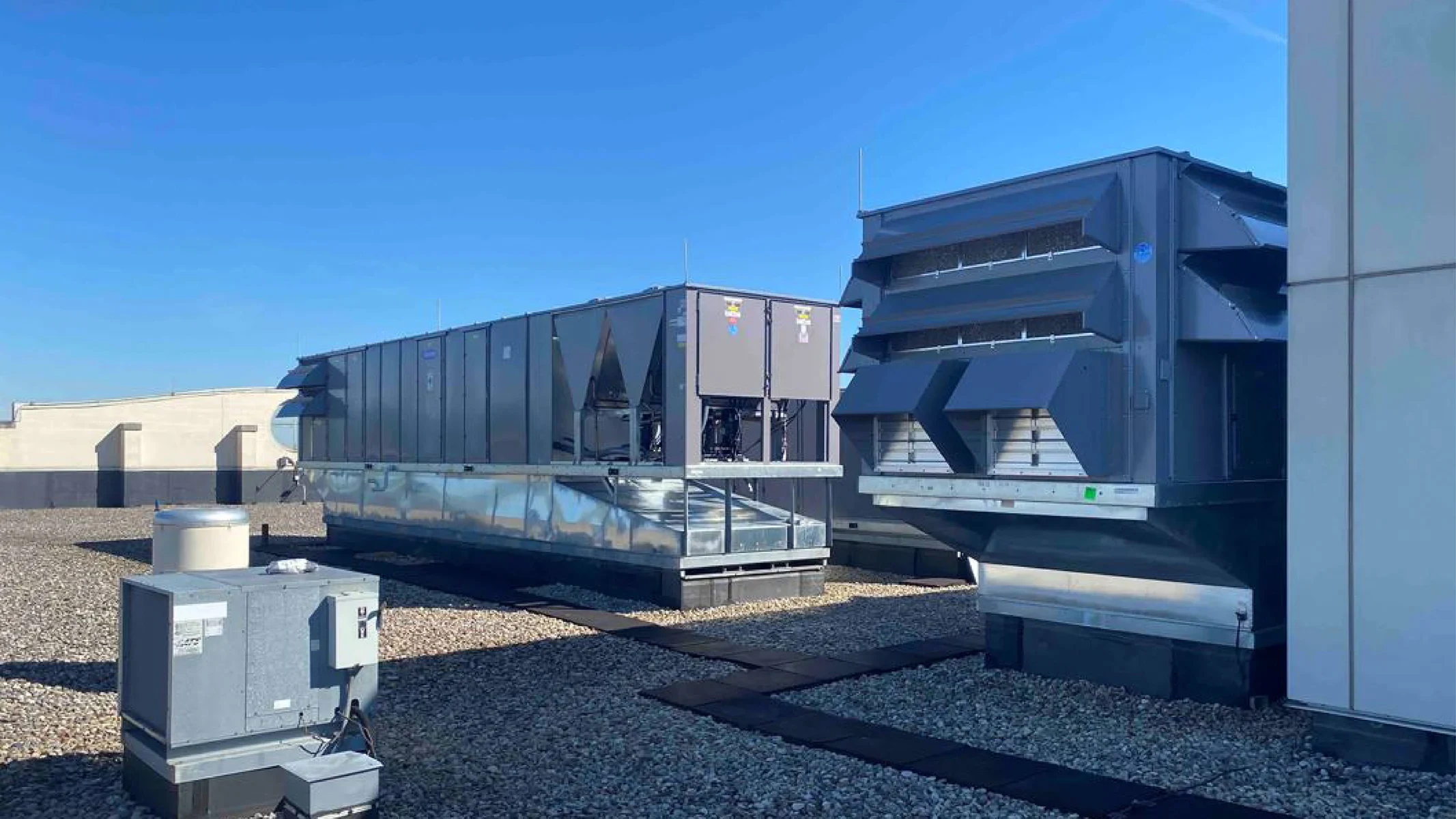
Research buildings add another layer: fume hood exhaust, specialty gas lines, and vibration-sensitive equipment all penetrate the roof deck in ways a standard office building never sees. We coordinate curb flashing and penetration counts with facilities before mobilizing, not after we're already on the roof finding stacks nobody mentioned.
Desert UV and the Academic Calendar Collide
Las Cruces sits above 3,900 feet with close to 300 sunny days a year, and that elevation means UV intensity that chews through membrane plasticizers faster than roofs at sea level. Ballasted and unprotected black EPDM show chalking and shrinkage cracks years ahead of what a manufacturer's warranty table assumes for milder climates.
The practical problem is that the best roofing weather - the long dry stretch before monsoon season starts - overlaps with summer session and full move-in prep. We build phased schedules that hit dorms and dining halls before the fall semester loads them back up, and push labs and administrative buildings to whichever window has the least foot traffic.
- Research labs and vivariums with specialty exhaust penetrations
- Residence halls needing move-in-ready completion dates
- Dining and student union buildings with grease-laden rooftop exhaust
- Athletic facility roofs over gyms, natatoriums, and field houses
- Library and archive buildings where interior humidity control is non-negotiable
- Administrative buildings with historic facades and non-standard parapets
Membrane Choices for Multi-Building Portfolios
For facilities managing several buildings on one campus footprint, we lean toward TPO or PVC with mechanically fastened attachment where wind uplift and reroof timelines both matter. White or light-colored membrane also cuts rooftop unit run time during the long cooling season, which shows up on utility bills that budget committees actually read.
Where a building has irregular penetrations from lab equipment or older HVAC retrofits, we sometimes recommend a fluid-applied silicone system instead. It flashes around odd shapes without the seam count a sheet membrane would need, and it goes down without an open flame anywhere near occupied space.
Working Around Occupied Buildings
Noise and dust restrictions are stricter on campus than at a typical office park. Class schedules, testing windows, and even library quiet hours factor into when we can run a mechanical fastener gun or stage material with a crane. We build a delivery and staging plan before the first crew shows up, so loading docks stay clear for the building's normal operations.
We also keep interior teams looped in daily during active tear-off. A roof leak during a lab experiment or a server room outage is a different kind of emergency than a leak over an empty storage room, and we prioritize dry-in accordingly.
Campus access control adds a logistics layer most commercial sites skip entirely. Card-access doors, security escorts for after-hours crews, and parking restrictions around loading zones all need coordination with campus police or facilities dispatch before a crew shows up for the first day. We build that coordination into the pre-mobilization checklist rather than discovering the gate code doesn't work on move-in morning.
Budget Cycles and Capital Planning
Institutional roofs usually move through capital planning committees, not a single facilities director's signature. We provide the kind of documentation - core samples, moisture scan results, remaining-life estimates - that holds up in a budget presentation, so the project doesn't stall waiting on data nobody collected during the initial walk.
We also flag when a targeted recover makes more sense than a full capital reroof, because stretching a limited maintenance budget across more buildings sometimes beats concentrating it on one full replacement. For campuses managing a dozen or more roofed buildings, we sometimes recommend a phased multi-year plan tied to each roof's actual remaining life rather than a single large capital ask that competes with every other campus priority in one budget cycle.
Questions We Hear From Campus Facilities Staff
Can work happen while classes are in session?
Yes, with restrictions. We schedule the loudest phases - tear-off and mechanical fastening - around class blocks and testing periods, and switch to quieter tasks like flashing detail work during the day if needed.
How do you handle roofs with multiple past repairs layered on top of each other?
We core-sample and moisture-scan before quoting, so the proposal reflects what's actually under the surface rather than an assumption based on the top layer.
Do you coordinate with our internal facilities crew?
Always. Your team knows which rooms are occupied, which equipment is sensitive, and which access points are off-limits on a given week - we build the schedule around that information, not around ours.
What roof systems hold up best against this area's UV exposure?
TPO and PVC with reflective membrane resist UV degradation better than unprotected EPDM at this elevation, and they cut summer cooling load on top of that.
Can you work around fume hood or lab exhaust penetrations without shutting down research?
In most cases, yes. We coordinate directly with lab staff to sequence flashing work around active exhaust runs and avoid downtime for sensitive research.