

- Home
- Roof Systems
- Spray Polyurethane Foam Roofing in Las Cruces, NM
Roof Systems
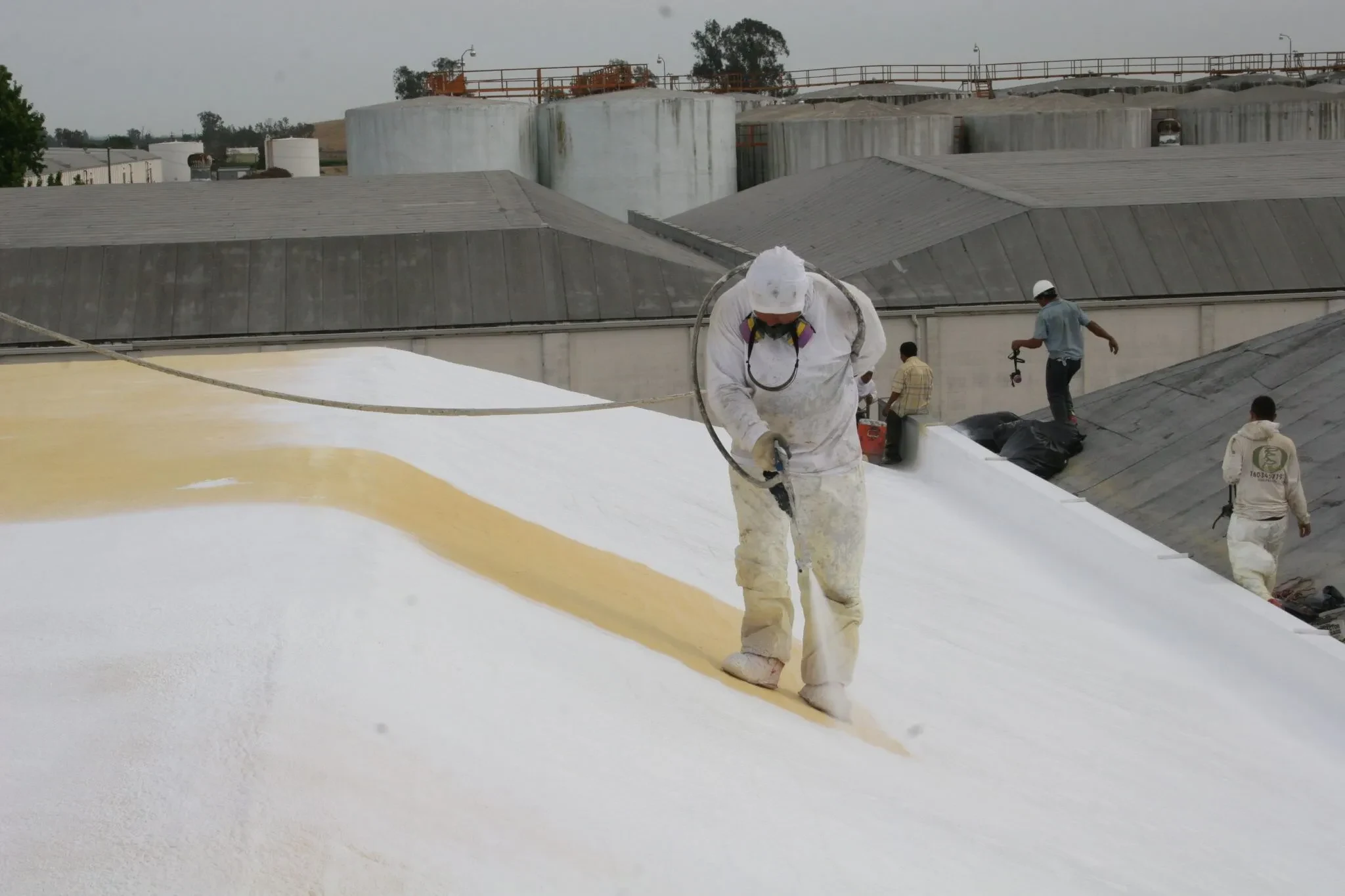
Spray Polyurethane Foam Roofing in Las Cruces, NM
Spray Foam for Roofs With Too Many Penetrations
Spray polyurethane foam earns its place on roofs that would otherwise be a maze of flashing details - buildings with dozens of penetrations, irregular equipment layouts, or additions that never got properly tied together. It goes down as a liquid and cures into a monolithic, self-flashing surface around whatever shape is already up there.
Where Dense Penetrations Make Foam the Right Call
Food processing and ag-adjacent buildings around the valley often carry more rooftop penetrations than a typical commercial building - exhaust stacks, condensate lines, multiple curb-mounted units added over the years as operations grew. Every one of those is a potential leak point on a traditional membrane, but foam flows around and seals them as part of the application itself.
We see this most on older buildings that have had equipment added piecemeal over decades, where a membrane reroof would mean detailing dozens of individual penetrations one at a time.
Insulation Value That Fights Diurnal Swings
Foam is applied at a thickness that gives real R-value as part of the roofing system itself, not as a separate insulation layer underneath a membrane. That matters here because our daily temperature swings - 35 to 45 degrees between morning and afternoon on a spring or fall day - put real thermal stress on a building envelope, and foam's insulating mass helps buffer the roof deck from that cycling.
The Recoat Schedule Isn't Optional
Foam needs a protective topcoat - usually acrylic or silicone - and that topcoat has its own recoat schedule that owners need to budget for going forward. Foam left uncoated or with a worn topcoat degrades from UV exposure fast, and at this elevation that degradation clock runs faster than it would at sea level.
We build the recoat interval into the maintenance conversation at the time of install, not as a surprise five years later, because skipping a scheduled recoat is the single most common way we see foam roofs fail early.
Vulnerability to Impact and Foot Traffic
Foam is a great insulator but a soft target for impact - dropped tools, dragged equipment, or hail can dent or gouge the surface in a way a tougher membrane resists better. On roofs with frequent maintenance traffic we're careful to recommend walk pads or reconsider whether foam is the right system at all if traffic will be constant.
Hail from summer thunderstorm activity is a real, if occasional, factor here, and a foam roof takes a hail hit differently than a membrane does - the topcoat can crack or the foam beneath can dent, and we inspect for that specifically after any significant storm rather than waiting for the next scheduled visit.
We're upfront with owners weighing foam against a membrane system that this impact vulnerability is a real tradeoff against the insulation and monolithic-coverage benefits, not a minor footnote.
- Penetration count and layout reviewed to confirm foam is the right fit
- Application weather window - wind, temperature, and humidity all affect cure quality
- Topcoat type selected and recoat interval documented at time of install
- Foot traffic frequency assessed against foam's lower impact resistance
- Existing deck condition confirmed sound before spraying over it
- Thickness applied to manufacturer spec for the building's insulation goals
Application Timing Around Our Weather
Spraying foam requires a real weather window - too much wind scatters overspray and ruins the finish, and spring is our windiest, dustiest stretch of the year. We watch forecasts closely and won't spray into gusty conditions or when airborne dust would contaminate the curing surface, which sometimes means scheduling around a narrower calendar than a membrane install would need.
Monsoon Considerations for Foam Roofs
A properly coated foam roof handles monsoon bursts fine - the coating provides the waterproofing layer, and foam's monolithic, joint-free nature means there are no laps or seams for water to find. What we watch closely is topcoat wear at ponding areas, since a thinning coating over a ponded low spot is where foam roofs develop problems first.
Foam is applied at varying thickness to create positive slope toward drains even on a structurally flat deck, which is one of its real advantages on older buildings that were never built with adequate drainage slope in the first place - we can correct that during application rather than fighting the existing deck shape.
Questions We Field About Spray Foam Roofs
Is spray foam a good fit for a building with heavy rooftop foot traffic?
Not usually as the primary system - foam's impact resistance is lower than a reinforced membrane, so buildings with frequent maintenance traffic often do better with TPO or PVC and walk pads instead.
How often does the topcoat need to be reapplied?
Recoat intervals depend on the topcoat product and UV exposure, and we document a specific schedule for each roof at install rather than giving a generic number.
Can foam be applied over an existing membrane roof?
Yes, in many cases, provided the existing surface is sound, clean, and properly primed - foam doesn't require tearing off a compatible existing roof.
Why does wind matter so much for foam application timing?
Overspray drift in windy conditions wastes material, creates an uneven finish, and can contaminate the curing surface with airborne dust, which is common during our spring wind season.
Does foam actually reduce cooling costs compared to a membrane roof?
Foam's added insulation value can reduce heat transfer through the roof assembly, though the real-world impact on cooling costs depends on the building's existing insulation and HVAC setup.