
- Home
- Roof Systems
- TPO 80-Mil Roofing in Las Cruces, NM
Roof Systems
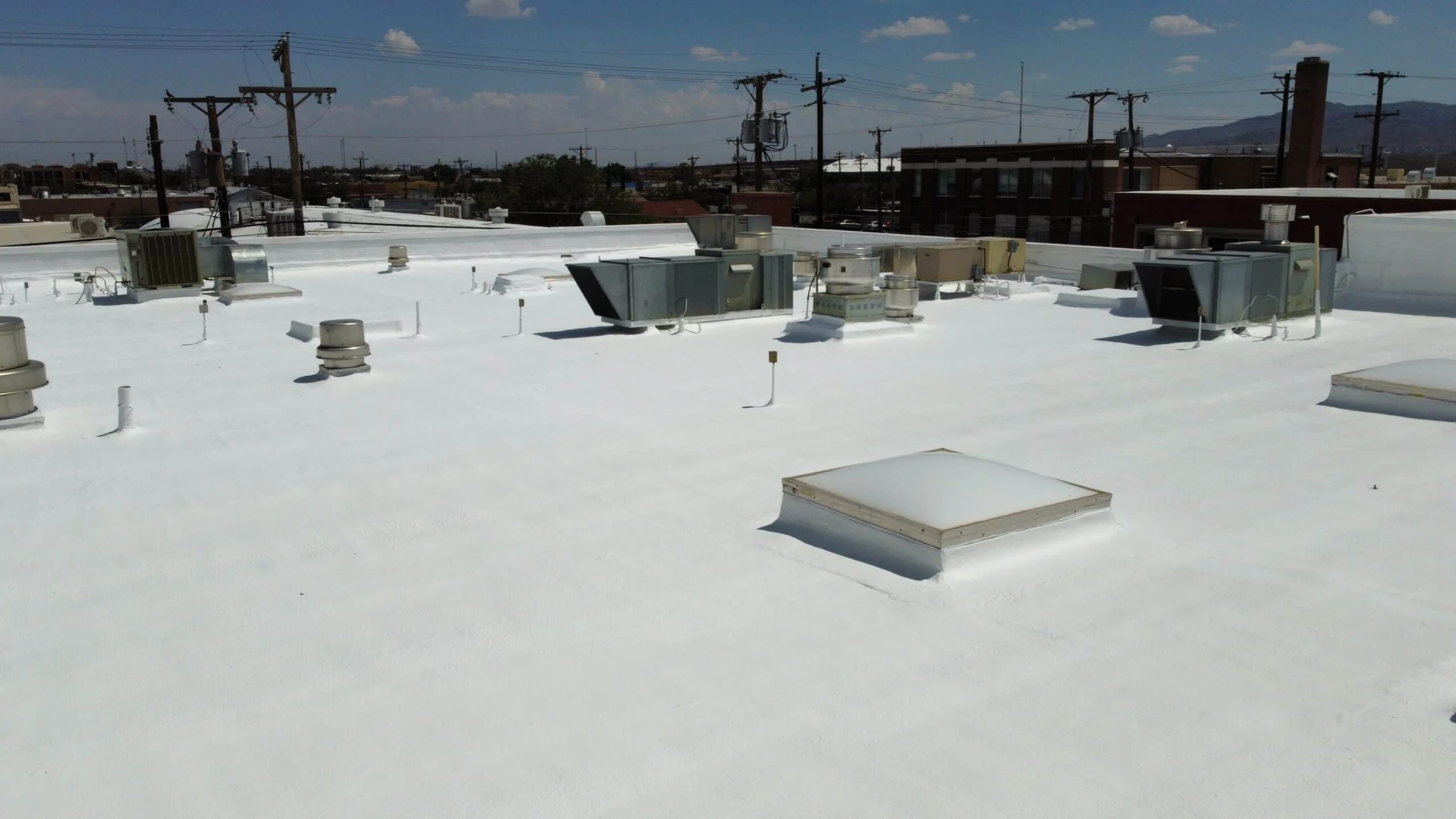
TPO 80-Mil Roofing in Las Cruces, NM
Stepping Up to 80-Mil TPO in the Mesilla Valley
Eighty-mil TPO isn't a default spec for us - it's the answer to a specific problem. When a roof carries more foot traffic, more rooftop equipment, or more exhaust exposure than a typical office building, the extra material thickness earns its keep fast.
Where 80-Mil Pays for Itself
Food processing buildings around the valley, distribution centers with dense rooftop mechanical layouts, and any facility planning a solar array all push us toward 80-mil. The membrane is thicker over every fastener plate and at every seam, which matters more when technicians are up there regularly for equipment service, not only for us during scheduled inspections.
We've seen 60-mil roofs on light-industrial buildings take punctures within a few years simply because the maintenance crew is up there constantly swapping filters or servicing curb-mounted units. Eighty-mil buys margin against that kind of routine wear that a quieter building never generates.
Distribution and logistics buildings tied to the Santa Teresa port of entry corridor are a good example. Those roofs carry racked HVAC units, dunnage storage, and periodic contractor traffic for tenant build-outs, and the extra membrane thickness holds up better against dropped tools and dragged equipment than a thinner system does.
Ag Exhaust and Chemical Exposure
Chile processing and dairy-adjacent facilities on the edge of town sometimes vent exhaust with grease or particulate content across the roof surface. That buildup can degrade a thinner membrane's surface faster than plain UV exposure alone, and it's one of the first questions we ask when a facility manager in that sector calls us.
Eighty-mil doesn't make a roof immune to chemical exposure, but the added material gives more life before the surface layer thins out to the point where seams and fastener plates start showing through.
Wind Uplift and Fastening at Higher Thickness
A thicker membrane changes the calculation for fastening spacing and plate size, especially at corners and perimeters where wind uplift pressure is highest. Open desert terrain around Las Cruces means several of the industrial parks we work in sit in higher exposure categories than a similar building tucked into a denser part of town.
We run uplift calculations per building rather than reusing a standard pattern from the last job, because roof height, parapet configuration, and surrounding terrain all shift the numbers.
- Rooftop foot traffic frequency - weekly service visits push toward 80-mil
- Planned solar, additional curb-mounted units, or future rooftop expansion
- Exhaust type and any grease or particulate content hitting the membrane
- Wind exposure category based on surrounding terrain and building height
- Warranty term length available at 80-mil versus 60-mil from the same manufacturer
- Insulation R-value pairing - thicker membrane doesn't replace insulation upgrades
Cost Difference Against Service Life
Eighty-mil runs a real premium per square over 60-mil, and we don't pretend otherwise. What we walk owners through is service life against that premium - a roof that avoids two or three early puncture repairs, or qualifies for a longer no-dollar-limit warranty, often makes the extra cost a wash over the life of the roof rather than a pure add-on expense.
For a building with light traffic and no unusual exposure, we'll say plainly that 80-mil isn't worth the money. This is a case-by-case call, not a blanket upsell.
We put both numbers in front of the owner at bid time - material and labor cost per square for each thickness, plus what the manufacturer's warranty desk will offer at each tier - so the decision gets made on the building's actual use, not on whichever option carries a bigger margin for us.
Monsoon and Drainage Behavior Doesn't Change
Thickness doesn't change how a roof drains. An 80-mil system still needs correctly sloped drains and scuppers sized for a monsoon burst, and we still check ponding areas the same way we would on a 60-mil job. The membrane upgrade solves a durability problem, not a drainage design problem, and we won't sell it as a fix for standing water.
If a building has chronic ponding, we address that with tapered insulation or added drainage before we ever discuss membrane thickness, because a thicker membrane sitting in standing water for days at a time still ages faster than one that drains properly.
What Facilities Teams Ask Before Approving 80-Mil
Is 80-mil TPO worth it on a light-traffic office roof?
Usually not. If the roof only sees our crew twice a year and has no unusual exhaust or chemical exposure, 60-mil gives you the same practical service life for less money.
Does 80-mil come with a longer warranty than 60-mil?
Often yes - manufacturers frequently extend no-dollar-limit warranty terms on 80-mil systems, though the exact terms depend on the specific product line and whether the installation meets their fastening and detail requirements.
Will 80-mil hold up better against chile-processing exhaust?
It holds up longer than 60-mil against grease and particulate buildup, but exhaust exposure still calls for more frequent cleaning and inspection regardless of membrane thickness.
Can we upgrade an existing 60-mil roof to 80-mil later?
Not as a simple upgrade - that would mean a new membrane installation, either as a recover over the existing system if the substrate allows it, or a full tear-off, not a retrofit of the current membrane.
Does 80-mil need different fastening than 60-mil?
Fastener spacing and plate sizing are calculated per building based on wind exposure, not automatically increased with membrane thickness, so we run the uplift numbers separately for every job.