
- Home
- Roof Systems
- Silicone Roof Coating in Las Cruces, NM
Roof Systems
Silicone Roof Coating in Las Cruces, NM
Silicone Coating for Roofs That Sit in Monsoon Water
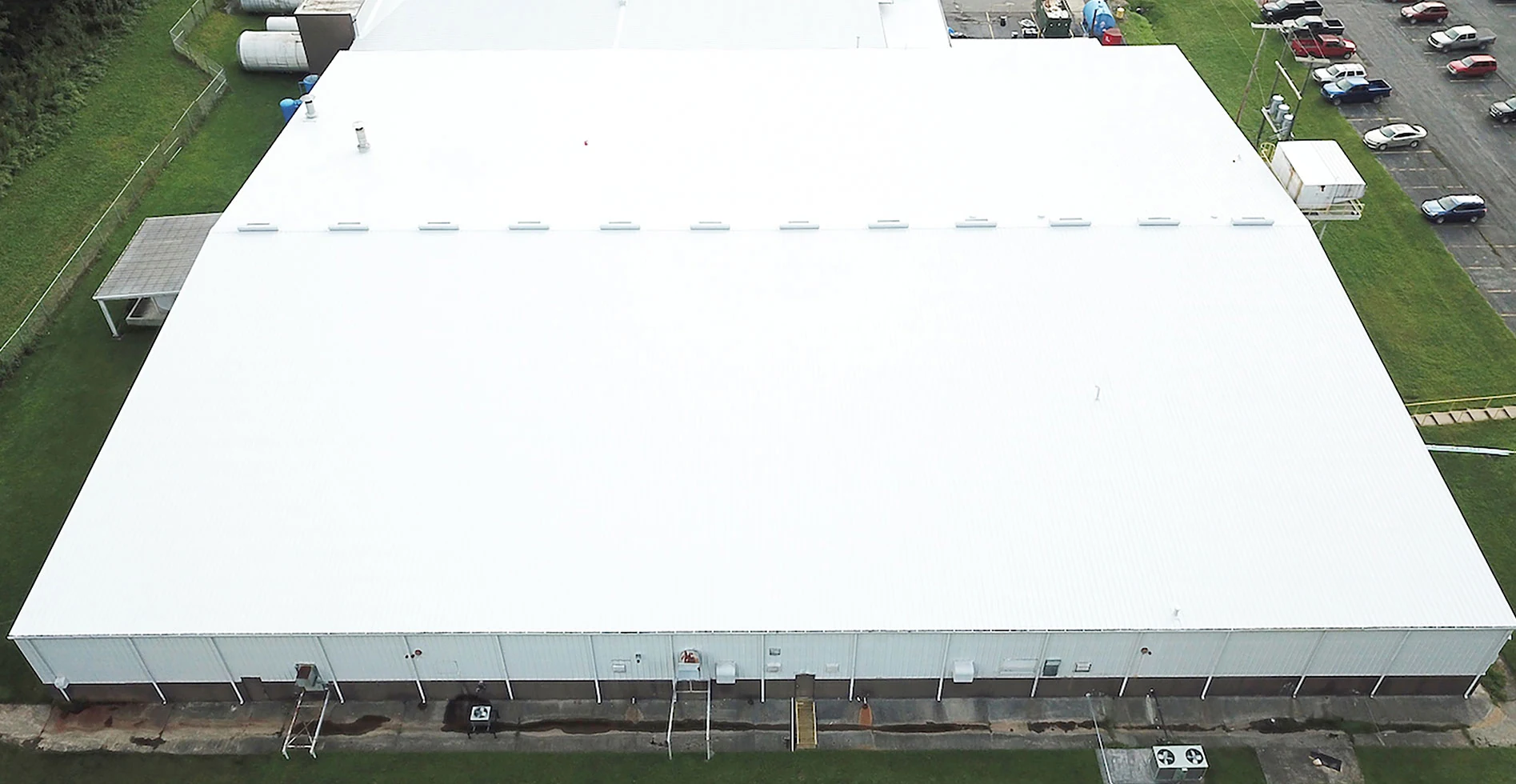
Silicone is the coating we bring up first whenever a ponding problem is part of the conversation. Where other coating chemistries can soften or re-emulsify under standing water, silicone tolerates it, and that single property matters a lot on a roof that goes dry for months and then takes a monsoon burst all at once.
Why Ponding Resistance Is the Deciding Factor Here
Our rain doesn't arrive gently. Most of the year a low-slope roof sees essentially no precipitation, and then July through September brings short, intense monsoon bursts that can overwhelm drains built for a slower rain event. Water sits in low spots afterward, sometimes for a day or two before it fully drains.
Acrylic coatings, which perform fine in steady climates, can struggle with that specific dry-then-drenched cycle - repeated ponding softens the film over time. Silicone doesn't have that weakness, which is why it's become our default recommendation for restoring existing mod-bit, BUR, or metal roofs with known low spots.
Restorative Coating Over Existing Substrate
A silicone coating goes over sound existing roofing rather than requiring a tear-off, which makes it a practical option for older mod-bit or built-up roofs around the older commercial corridors near downtown and NMSU that have granule loss or surface weathering but no structural failure underneath.
We check the substrate carefully before recommending a coating job - wet insulation or advanced membrane deterioration means coating is the wrong move and a recover or replacement is the honest answer instead.
This restorative approach also works well on aging metal roofs common on ag storage and light-industrial buildings around the valley, where a coating system can seal seams and fastener penetrations that have started to work loose after years of thermal cycling, without the cost of a full metal panel replacement.
UV Resistance Without the Chalking Problem
Silicone holds up well under sustained UV exposure without the surface chalking that affects some other coating chemistries and even some reflective membranes over time. At this elevation, where UV intensity runs above what the same roof would see at sea level nearly every day of the year, that resistance matters more than in a lot of markets.
That long-term stability is part of why we recommend silicone specifically for a restoration that's meant to extend a roof's life for a decade or more, rather than a shorter-horizon patch job.
Substrate Prep Against Dust and Grit
Dust and airborne grit are the enemy of coating adhesion, not only membrane wear. A coating applied over a dusty, poorly cleaned surface can delaminate within a couple of seasons, which is a fast and expensive failure for what's supposed to be a restorative, budget-friendly move.
Spring wind events here deposit fine dust across every exposed rooftop, so we schedule pressure washing and let the surface fully dry before any coating goes down, and we won't coat on a day when wind is actively depositing new dust onto a freshly cleaned roof.
- Substrate condition confirmed dry with a moisture scan before coating
- Full pressure wash and dry-down, timed around wind and dust conditions
- Ponding areas mapped and addressed with additional coating thickness or drainage fixes
- Mil thickness applied to manufacturer spec, checked with a wet-film gauge during application
- Existing seam and flashing repairs completed before coating, not covered over
- Reflectivity rating confirmed for the specific product used, not assumed generic
What Silicone Coating Doesn't Fix
A coating restores and extends a roof's service life - it doesn't repair structural deck problems, wet insulation, or membrane that's already failed. We're direct with owners when a roof has moved past the point where coating makes sense, because a coating job on a failing substrate just delays a bigger repair at higher eventual cost. Compare this against a full recover or overlay when substrate condition calls for more than a coating.
We put a moisture scan in front of every coating recommendation, not only a visual walk. A roof can look dry and sound from the surface while the insulation underneath is already saturated, and coating over that condition just traps moisture and hides the problem until it shows up as a bigger repair down the line.
What Owners Want to Know Before Coating a Roof
Can silicone coating go over an existing TPO or PVC membrane?
Yes, with proper primer and surface prep, silicone can coat most existing single-ply membranes that are otherwise sound but showing UV wear or seam concerns.
How long does a silicone coating last before recoating?
Service life depends heavily on mil thickness applied and substrate condition, and we set expectations per roof rather than quoting a blanket number at bid stage.
Does silicone coating actually stop ponding water?
It doesn't eliminate ponding by itself - that's a drainage and slope issue - but it tolerates standing water without degrading the way some other coatings do, which protects the roof while ponding gets addressed separately.
Is silicone coating cheaper than a full reroof?
Generally yes, substantially, which is exactly why substrate condition matters so much - coating only makes financial sense on a roof that's actually a good candidate for restoration rather than replacement.
Does dust in the air affect how long a coating job takes here?
It can. We schedule around wind forecasts to avoid coating during active dust conditions, which sometimes shifts a start date by a day or two compared to a calmer climate.