
- Home
- Commercial Roofing Services
- Commercial Reroofing in Las Cruces, NM
Commercial Roofing Services
Commercial Reroofing in Las Cruces, NM
Reroofing Flat and Low-Slope Buildings Across Las Cruces
A roof that gets patched every year eventually costs more than one that gets replaced on a plan. When we walk a building here and find membrane chalking under the sun, seams reopening after every thermal cycle, and a patch history longer than the warranty ever was, reroofing stops being a maybe and becomes the responsible call. We run the whole scope ourselves, from tear-off through final flashing, on a schedule that respects this valley's weather instead of fighting it.
When Reroofing Beats Another Round of Patching
Most FMs already know the pattern before we show up. The same three low spots keep leaking every monsoon season, the roofing crew has been out four times this year, and each fix buys a few months before the next call comes in. At some point the membrane itself has given up, well beyond whatever flashing detail someone nicked during a rooftop unit swap.
We look hard at systems that have logged fifteen to twenty summers of desert sun. TPO and EPDM both take real damage from UV loading this intense, and by the time membrane has gone brittle and started pulling away from penetrations, patching is buying weeks, not years. If a moisture scan turns up wet insulation under more than a small section of roof, we tell you straight that a reroof is the honest path forward, not another temporary fix billed as a repair.
Reading the Building Before We Spec Anything
Before we write a proposal we walk the roof and pull test cuts down to deck in a few representative spots, plus a moisture scan across the field. That tells us what's actually happening under the membrane instead of guessing from the surface.
- Deck condition and fastener pull-out from years of expansion and contraction
- Insulation R-value and moisture content at low spots and around old penetrations
- Drainage slope and any low areas that pond after a heavy monsoon burst
- Flashing details at parapets, mechanical curbs, and expansion joints
- Rooftop equipment loads, including cold-storage compressors and lab exhaust for campus buildings
- Wind uplift rating required for our exposure category and building height
That inspection drives the spec. A distribution building with a wide-open deck and heavy equipment loads gets a different fastening pattern and insulation package than a retail strip with a simple truss roof, and we don't hand you a generic proposal that ignores the difference.
Sequencing Around the Monsoon Window
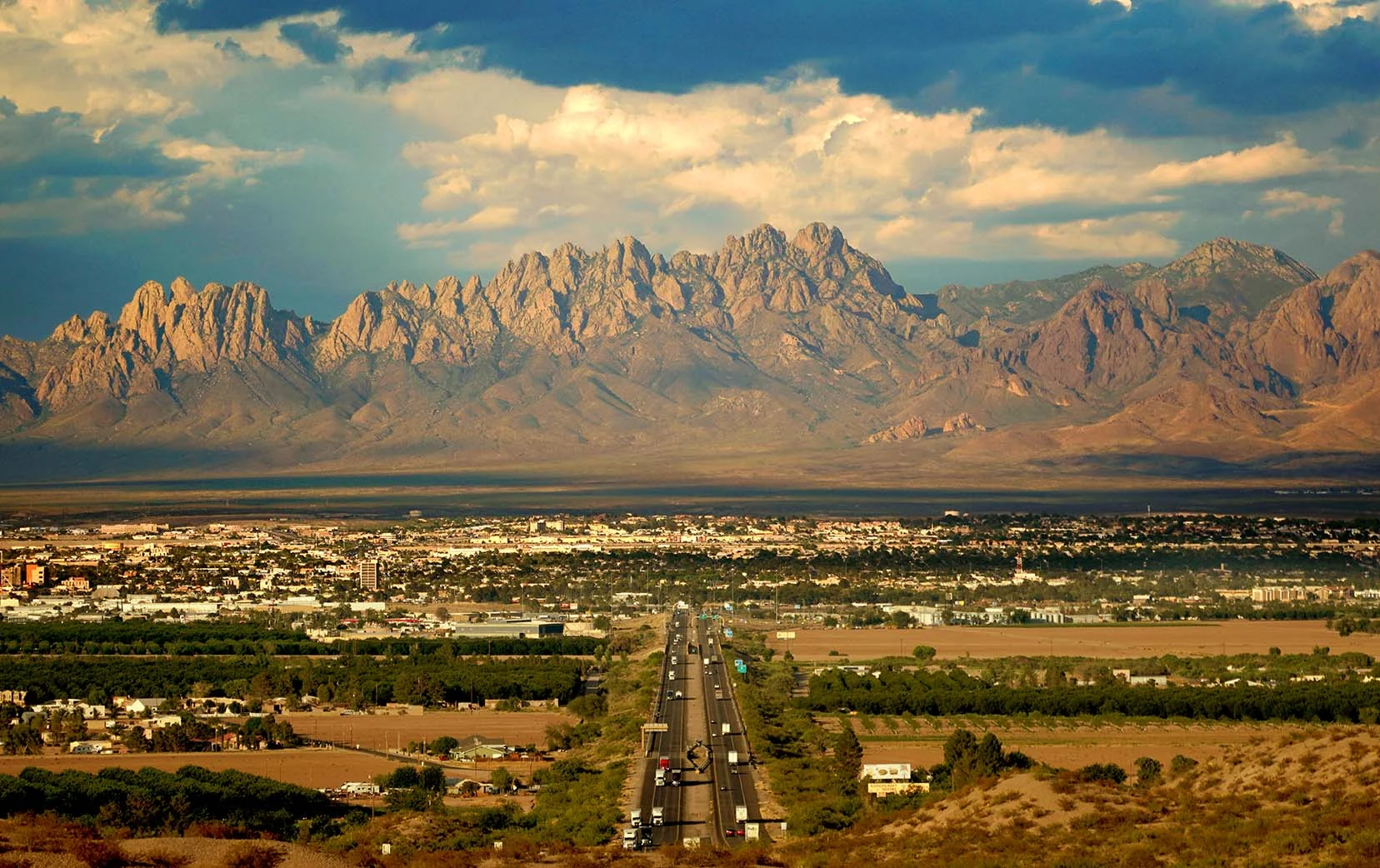
Late June through September brings afternoon storm cells that build fast off the Organ Mountains, and an open deck caught under one of those bursts is a bad day for everyone. We plan tear-off in phases small enough to dry in before the sky turns, working early mornings when the heat and the storm risk are both lower.
Every crew on our jobs ties off a section with temporary waterproofing at the end of the day as a standing rule, not something we scramble for when a cell shows up on radar. Outside monsoon season we can open larger sections at once, but from late spring through early fall we build the schedule around the storm pattern first and the calendar second.
Material Choices for High-UV, High-Swing Desert Exposure
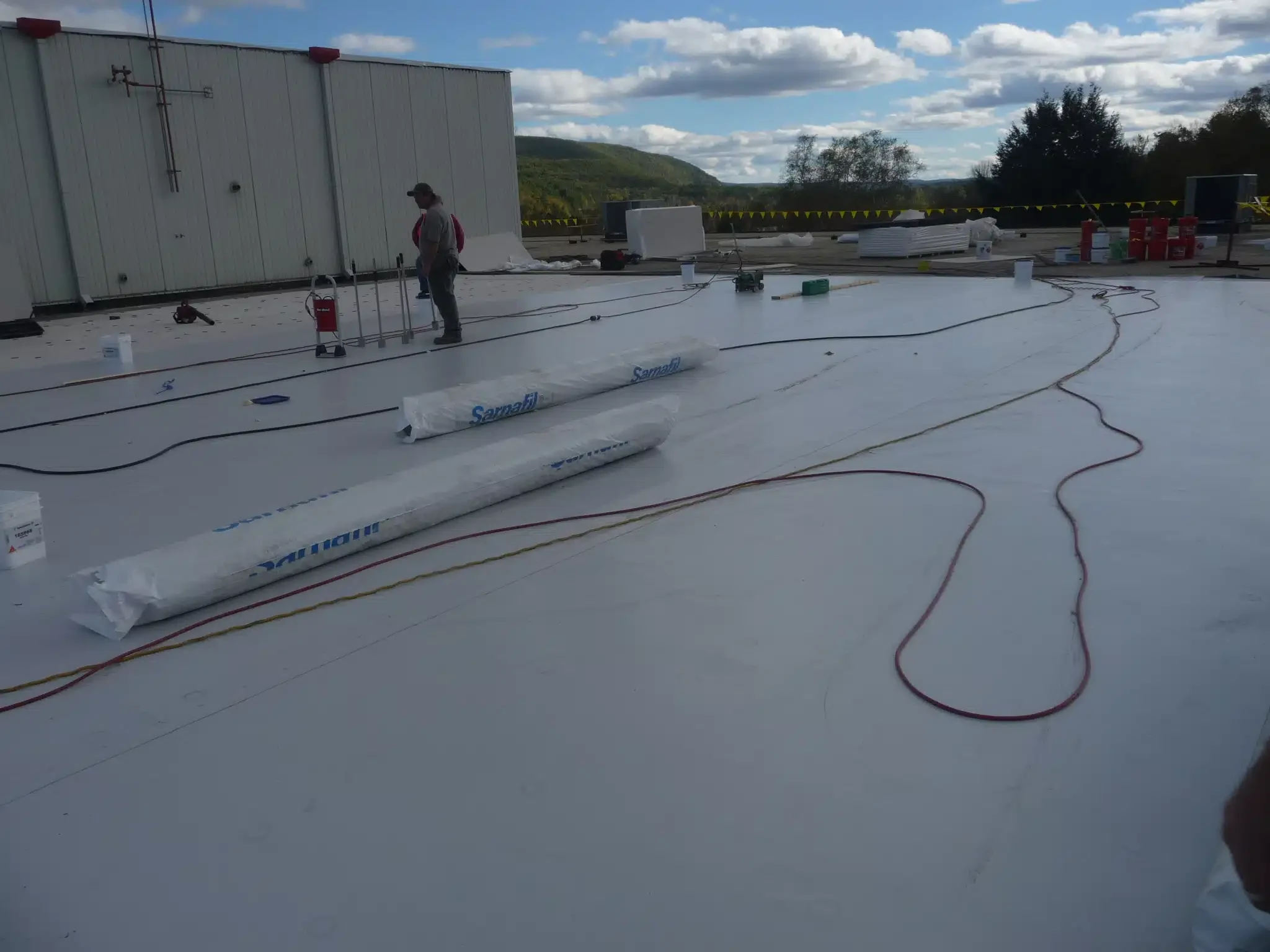
Surface temperatures on a dark membrane can push past 170 degrees here in July, and that heat load doesn't just age the roof, it drives up cooling costs for whatever's running underneath. We spec reflective TPO or PVC membrane on most flat-roof buildings for that reason, with white or light-colored surfacing that keeps rooftop units and the building envelope from fighting the sun all day.
Fastening patterns and expansion joint spacing matter more here than in humid climates, because Las Cruces sees wider swings between a hot afternoon and a cold desert night than most regions ever deal with. A membrane that isn't detailed for that daily stretch and shrink shows seam stress years before it should. On large flat-roof stock, the kind you see on distribution buildings and processing plants around the valley, we add expansion joints at intervals the manufacturer's own engineering calls for, not the minimum we can get away with.
Keeping Tenants and Operations Running During the Job
Reroofing an occupied building means working around somebody else's schedule too. We coordinate with property managers on dock access for logistics tenants, sanitation windows for food and ag processing operations, and academic calendars for campus facilities where noise and rooftop traffic need to stay clear of exam weeks.
We stage material and manage debris to keep loading areas open, and we keep dust and noise contained as much as a tear-off allows. At every point in the job there's a weathertight zone protecting the interior, even mid-phase, so a surprise storm cell doesn't turn into a ceiling tile problem two floors down.
Questions FMs Ask Before They Commit to a Reroof
How long does a full reroof take on a mid-size flat roof?
It depends on size, deck condition, and how much of the work has to happen in phases around your operations, but a mid-size building typically runs a few weeks from mobilization to final flashing. We give you a real schedule once the test cuts and moisture scan are done, not a rough guess up front.
Can you reroof in sections if we can't shut down the whole building?
Yes, and it's how we handle most occupied buildings anyway. We break the roof into zones sized to what we can tear off and dry in within a work day, so the building stays weathertight and operational the entire time.
Will you know before you start if the deck needs repair?
Test cuts and a moisture scan up front catch most deck and insulation problems before we mobilize, which cuts down on change orders once the crew is on the roof. We'd rather find bad deck during the inspection than during tear-off.
What happens if a monsoon cell rolls in mid-tear-off?
Every open section gets temporary dry-in at the end of each work period, so an unexpected storm doesn't put the interior at risk. We watch the forecast daily during monsoon season and adjust the day's scope if a cell is building.
Do you reroof over an existing system or always tear off?
That depends on deck condition, how many layers are already up there, and what code allows for your building. Where a recover is a legitimate option we'll say so, but if the deck or insulation is compromised, tearing off is the honest recommendation.