- Home
- Commercial Roofing Services
- Commercial Roof Insurance Claims in Las Cruces, NM
Commercial Roofing Services
Commercial Roof Insurance Claims in Las Cruces, NM
Documentation the Adjuster Can Actually Use
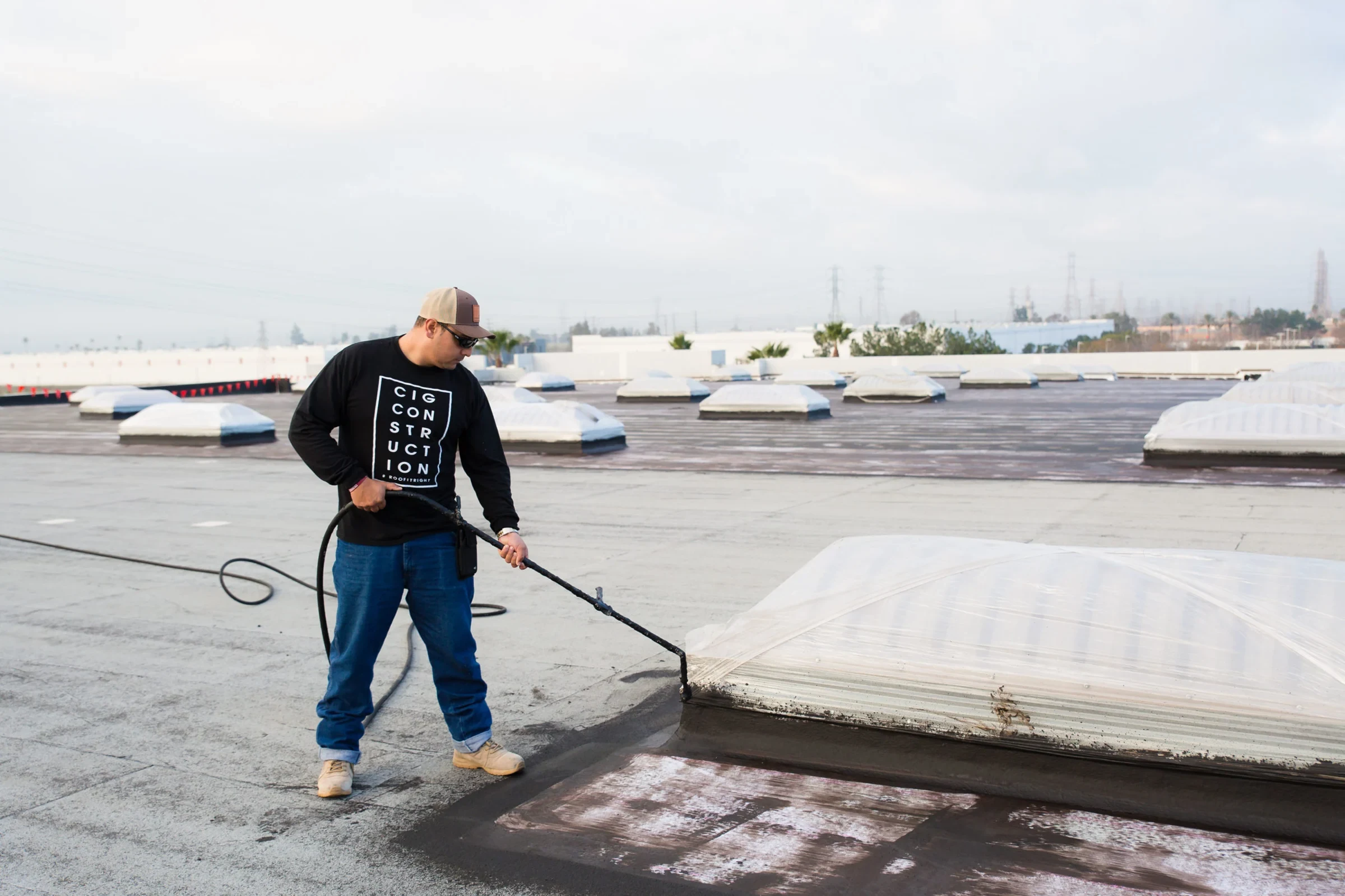
A commercial roof claim in the Mesilla Valley usually starts the same way, a monsoon cell drops heavy rain in twenty minutes, or a spring windstorm pulls at loose edge metal, and a facilities manager is left deciding whether the damage is worth a claim at all. We're a roofing contractor, not a public adjuster, and our part in that process is straightforward, we get on the roof, document what's actually there, and put together a repair scope that reflects the real extent of the damage, not a guess made from the parking lot.
What a Roof Claim Actually Requires
An insurer wants to see cause, extent, and cost, in that order. Cause means a clear, defensible explanation of what happened, wind uplift on a parapet edge, hail impact on a coating, wind-driven debris tearing a membrane seam. Extent means every affected square foot is identified, including sections beyond the one with the visible leak. Cost means a scope broken down by material and labor so the number can be checked against the actual work, not accepted or rejected on faith. We build our documentation around those three things because that's what actually moves a claim forward.
Getting on the Roof Fast Matters Here
Las Cruces sits at the edge of both the monsoon belt and the spring windstorm season, which means roofs here take damage from two different directions over the course of a year. A flat BUR or coated roof on an older downtown or NMSU-adjacent building reads a storm differently than a metal roof on an ag-processing building near the valley floor. We inspect with the specific roof system in mind, aggregate ballast, single-ply membrane, standing seam, coated modified bitumen, because the damage signature and the documentation needed are different for each.
Building the Damage Record
Our assessment produces dated, timestamped photos from multiple angles, moisture readings where water intrusion is a possibility, and a written narrative connecting the damage pattern to a specific weather event. We note membrane age, prior repair history, and drainage condition, since an adjuster reviewing the file benefits from that context as much as the photos themselves. On flat roofs common across the valley, we pay particular attention to drains and scuppers, since dust-clogged drainage after a dry spell followed by heavy monsoon rain is one of the more common contributing factors we find here.
Meeting the Adjuster on the Roof
We're glad to walk the roof directly with an insurance adjuster and answer technical questions, why a section reads as storm-caused versus ordinary UV wear, what a proper repair requires, whether a patch is sufficient or the membrane needs a larger recover. That's a factual, roof-specific conversation. We're not there to argue a number up, we're there to make sure the adjuster is working from the same complete picture we documented, including code-required upgrades and matching that a partial repair scope sometimes misses.
Full Scope, Not a Bigger Number
A roof claim scoped too narrowly is a common problem, not because anyone is acting in bad faith, but because a quick site visit can miss damage that isn't visible from ground level or from a single vantage point on the roof. Our job is to make sure nothing legitimate gets left out, wind-lifted flashing two sections away from the obvious leak, a cracked pipe boot that's been letting water in slowly since the same storm, edge metal fasteners backed out enough to fail in the next windstorm. That's a complete and accurate scope, not an inflated one.
Federal Contractors, Ag Processing, and Campus-Adjacent Buildings
The mix of commercial building stock around Las Cruces, White Sands-adjacent federal contractor facilities, chile and pecan processing buildings, and properties near NMSU, each come with their own claim considerations. A processing facility with a metal roof over sensitive equipment has different urgency than a flat-roofed retail building, and a federal contractor site often has its own documentation and access requirements layered on top of the insurance process. We adjust our documentation approach to the building without changing what it actually shows.
What We Won't Do
We don't file claims, negotiate settlements, or represent an owner's interests against the insurer, that's public adjuster work, and it's a different license and a different role than ours. We're your roofing contractor, not a public adjuster, we document and substantiate the roof damage so you and your adjuster are working from an accurate scope. We also won't guarantee a claim outcome or promise a specific payout figure, since that decision sits entirely with the insurer.
Insurance Claim Questions From Facilities Managers
Does insurance cover a full roof replacement?
It depends on the policy and the extent of covered damage. Some claims result in a full replacement when the damage is widespread enough that repair isn't practical, others result in a repair scope for the affected sections. We document the actual extent so that determination is made on real information rather than assumption.
What does the claim process usually look like?
Generally it starts with the owner reporting damage to their insurer, then an inspection, either ours, the adjuster's, or both together, followed by a scope of repair and a coverage decision. We support the inspection and documentation stages directly.
What if our claim gets denied or underpaid?
We can re-walk the roof and review our original documentation against the adjuster's findings, and point out anything that appears to have been missed. Beyond that, a denied or disputed claim sometimes calls for a public adjuster or attorney, which is outside what we do as a roofing contractor.
Should we repair or replace after storm damage?
That depends on the roof's age, the extent of the damage, and whether the existing system can be reasonably matched. We lay out both options with real numbers so the decision isn't made blind.
Can you meet with our insurance adjuster on short notice?
We do our best to accommodate adjuster schedules, especially in the days following a significant storm when timing matters most for an accurate record.