- Home
- Commercial Roofing Services
- EPDM Commercial Roofing in Las Cruces, NM
Commercial Roofing Services
EPDM Commercial Roofing in Las Cruces, NM
Where Black EPDM Still Makes Sense in a High-UV Market
Most of what we spec around Las Cruces skews toward reflective membrane, but EPDM still earns its place on specific roofs -- ballasted systems, buildings matching an existing black membrane, and projects where budget rules out a full tear-off. This page covers when we recommend it and how we handle the tradeoffs of running a dark membrane in a desert climate.
The UV Tradeoff We're Upfront About
Black EPDM absorbs far more solar heat than white TPO, and in a market with this much sun exposure that shows up on the utility bill and on the membrane itself over time. We don't pretend that tradeoff doesn't exist. When a building owner asks about EPDM, we walk through the cooling-load difference before we talk price, so the decision is made with full information.
Where EPDM still wins is durability against physical wear and its tolerance for the wide temperature swings this valley sees between a hundred-degree afternoon and a cool desert night. The material stays flexible across that range better than some alternatives, which matters on roofs with a lot of rooftop foot traffic or mechanical vibration.
Ballasted Systems and Wind Considerations
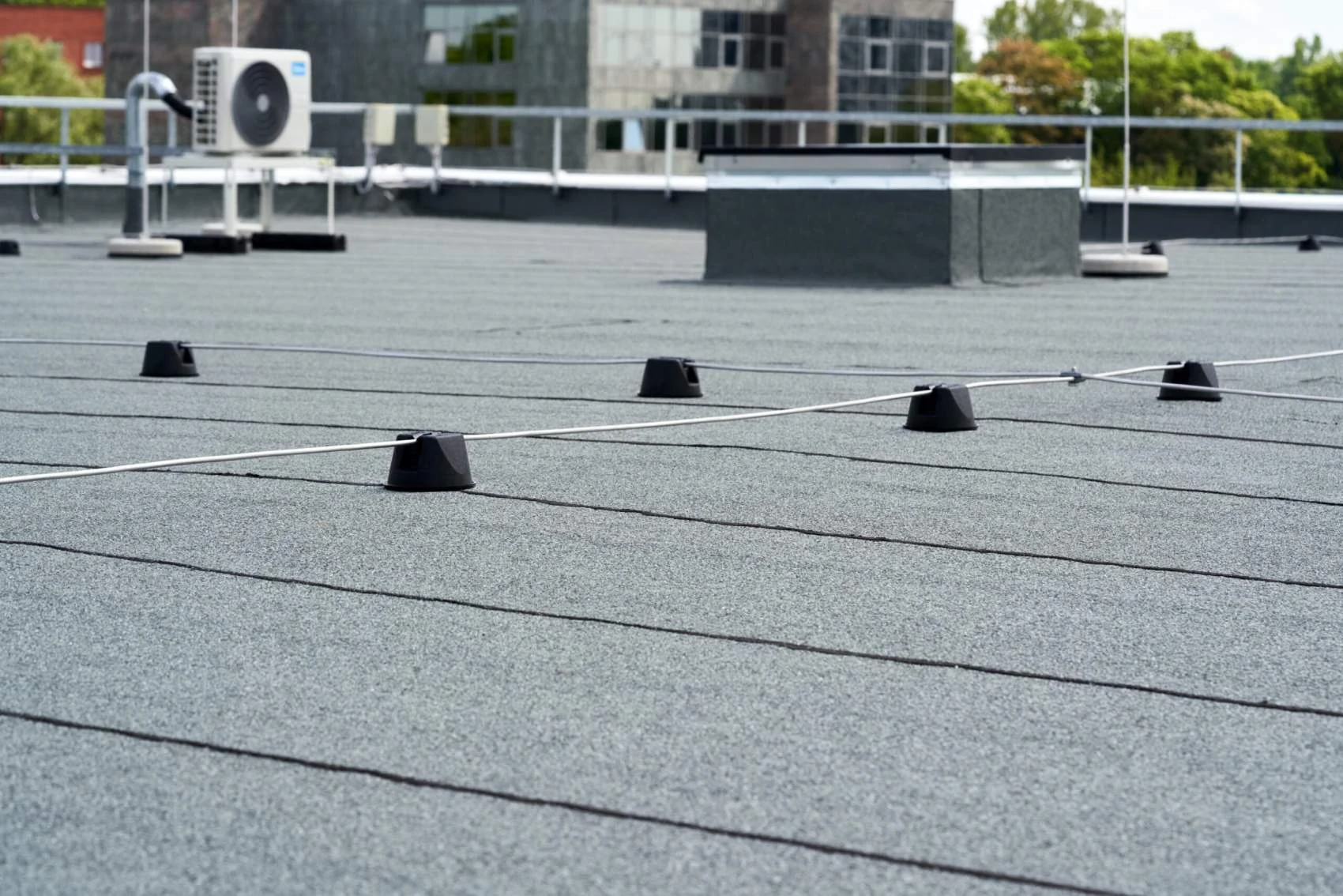
Ballasted EPDM, held down with river rock or paver ballast instead of fasteners or adhesive, is a system we still see on older buildings around downtown and near NMSU. It's a durable, field-repairable system, but ballast adds real weight and we always confirm structural capacity before recommending it, especially on older decks.
Wind is the other factor. Pre-monsoon dust events bring sustained gusts through the valley, and a ballasted roof needs adequate ballast depth and edge detailing to stay put. We inspect ballast distribution as part of every EPDM roof assessment, since it tends to migrate toward drains and low points over the years.
Seaming and Repair on Older EPDM Roofs
Older EPDM roofs around Las Cruces were often installed with taped or adhered seams that age differently than a heat-welded membrane. UV and thermal cycling break down seam tape faster here than in milder climates, and seam failure is the most common EPDM repair call we get.
- Seam tape failure at lap joints
- Flashing separation at parapet walls and curbs
- Ballast migration exposing bare membrane
- Punctures from rooftop equipment servicing
- Shrinkage at perimeter fastening on older sheets
- Ponding at low points where drainage has settled
We reseam with compatible splice materials rather than patching over failing tape, since a patch on top of degraded adhesive tends to fail again within a season or two.
When We Recommend EPDM Over TPO
We steer toward EPDM when an existing roof is already EPDM and a partial recover makes more sense than a full tear-off, when a ballasted system fits the structural and budget picture better than a mechanically attached membrane, or when a building's rooftop equipment layout makes field-repairable ballast preferable to a fully adhered sheet.
We steer away from it on buildings chasing lower cooling costs, on roofs with heavy foot traffic where reflective coatings pair better with the membrane, or on ag processing buildings where grease exposure argues for PVC instead.
A number of the older commercial buildings ringing downtown and the blocks near NMSU still carry original EPDM from a prior renovation cycle. On those roofs the honest conversation is usually about remaining service life -- whether a coating and targeted repair buys several more years, or whether the membrane has degraded past the point where recoating makes financial sense.
Coordinating EPDM Work Around Occupied Space
EPDM installation and repair work happens over buildings people are actively using -- classrooms, offices, retail floors. We schedule ballast handling and material staging away from active entrances and loading docks, and we keep sections dried in at the end of each day given how quickly a monsoon cell can build in the afternoon sky here.
On repair calls specifically, we prioritize getting the building watertight first and scheduling the permanent fix once the immediate leak is controlled, rather than leaving a facilities team waiting on a full crew mobilization for an active leak.
We also flag anything we find during an EPDM repair call that points to a bigger issue -- saturated insulation under a ballast field, for example -- rather than patching over a problem that will just resurface as a work order again next monsoon season.
Questions About EPDM in This Climate
Does black EPDM really cost more to cool than white TPO?
Generally yes, since it absorbs more solar heat. We quantify that tradeoff against the roof's specific condition and the building's cooling system before recommending either option.
Can you install white EPDM instead of black?
Yes, white EPDM exists and gives some of the reflectivity benefit while keeping the seaming and repair characteristics of the material. We discuss it as an option during the walkthrough.
Is ballasted EPDM too heavy for an older roof deck?
Sometimes. We confirm structural capacity before recommending a ballasted system, and we have alternatives ready if the deck can't carry the added weight.
How often does EPDM seam tape need attention here?
More often than in a milder climate, given the UV and thermal cycling this valley sees. We recommend periodic seam inspection as part of any maintenance program on an EPDM roof.
Can you coat an existing EPDM roof instead of replacing it?
Often, yes. A silicone or acrylic coating can extend the service life of sound EPDM -- we cover that approach in more detail on our coatings pages.