
- Home
- Commercial Roofing Services
- Modified Bitumen Roofing in Las Cruces, NM
Commercial Roofing Services
Modified Bitumen Roofing in Las Cruces, NM
Modified Bitumen for Roofs That Take a Beating Every Monsoon Season
Modified bitumen still earns its place on plenty of roofs around Las Cruces -- buildings with heavy rooftop foot traffic, older structures already carrying an APP or SBS system, and owners who want a roof that can absorb physical abuse without babying it. This page covers how we install and maintain it in a climate that swings between intense sun and sudden downpours.
A Multi-Ply System Built for Abuse
Modified bitumen goes down in layers -- usually a base sheet and a cap sheet, sometimes with an additional ply depending on the roof -- which gives it more physical mass than a single-ply membrane. That mass matters on roofs with constant foot traffic from equipment servicing, or buildings near NMSU and downtown where rooftop mechanical density is high and technicians are up there regularly.
We see this pay off most on older buildings with rooftop units that get serviced often. A single-ply membrane can show wear at those traffic paths faster than a multi-ply modified bitumen cap sheet does.
Torch-Applied vs. Cold-Adhered: How We Decide
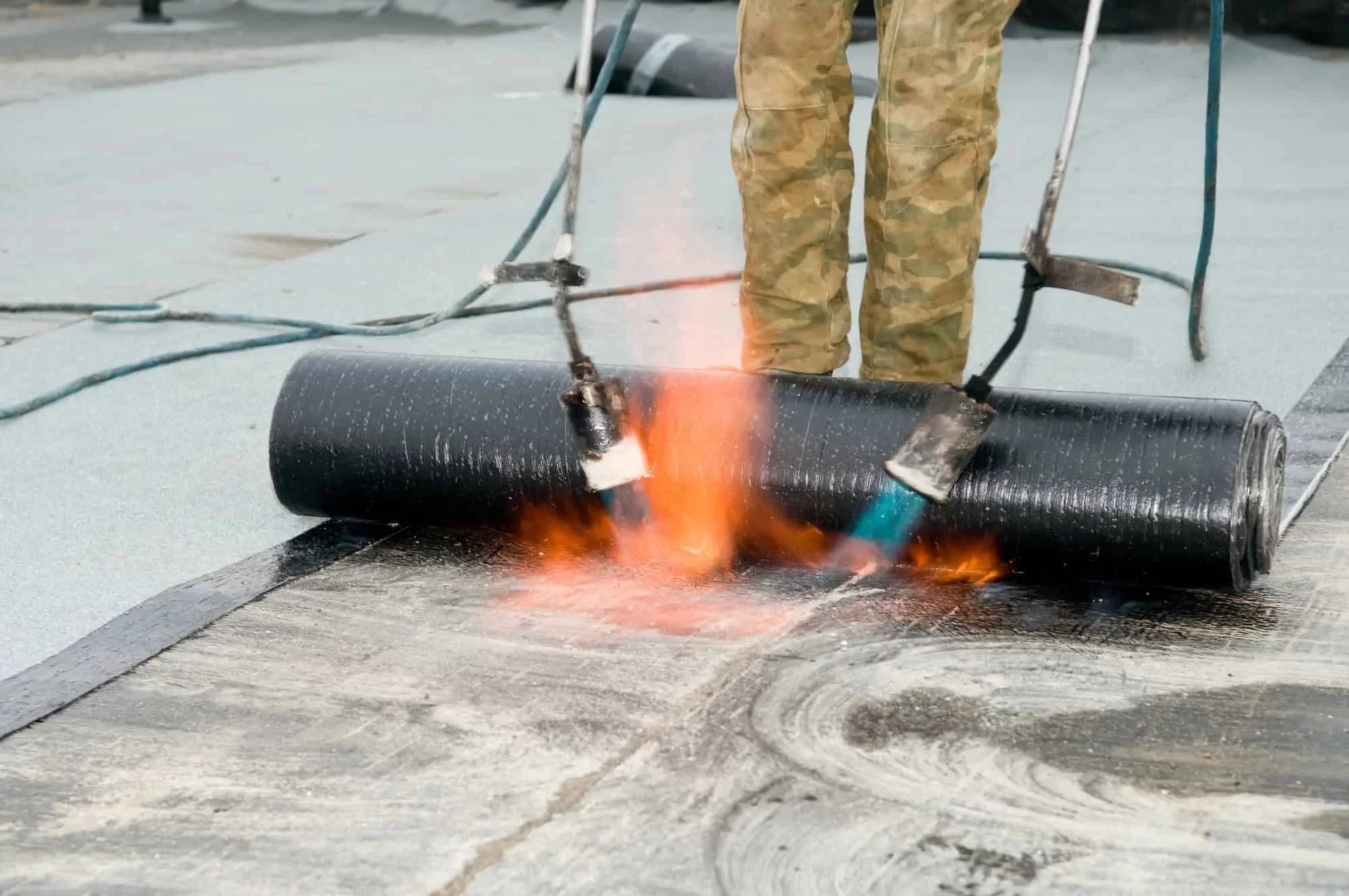
Torch-applied modified bitumen gives a strong, fully fused seam, but open flame on an occupied building carries real risk, especially near ag processing facilities where combustible dust or stored materials might be nearby. On those buildings we favor cold-adhered or self-adhered systems that skip the torch without giving up seam performance.
On standalone buildings with clear roof access and no adjacent combustible storage, torch-applied still gets specified where budget and existing substrate favor it. We make that call roof by roof, not as a blanket policy.
Fire watch and job-site precautions are non-negotiable on any torch application, and we treat that seriously regardless of whether the building next door is empty or occupied. A five-minute shortcut on fire watch isn't worth the risk on any roof, and we don't cut it.
Granule Surfacing and UV Exposure
Most cap sheets come with a granule surface that provides some UV protection on its own, but granule surfacing doesn't reflect heat the way a coated or single-ply reflective membrane does. On buildings chasing lower cooling costs, we often pair modified bitumen with a reflective coating over the granule surface rather than leaving it bare.
- Older buildings recovering an existing BUR or modified bitumen roof
- Roofs with heavy foot traffic from frequent equipment servicing
- Buildings needing a multi-ply system without single-ply seam risk
- Mechanical penthouse and equipment curb detailing
- Parapet wall and base flashing on older masonry buildings
- Loading dock canopy and lower-slope transition areas
Monsoon Drainage on Multi-Ply Roofs
Seams and flashing details on a modified bitumen roof take the same monsoon stress every other membrane in this valley does -- short, intense downpours that overwhelm undersized drains fast. We check flashing at every penetration and parapet transition during an inspection, since a multi-ply system hides a slow leak longer than a single-ply membrane will before it shows up as a stain inside.
Base flashing detail work is where we spend the most time on repair calls. A cap sheet field can look sound for years while base flashing quietly opens at a wall transition, and that's usually where a monsoon downpour finds its way in.
Roof-mounted mechanical loads add another wrinkle. Buildings near NMSU and downtown that carry older HVAC and exhaust equipment tend to have curb flashing that's been patched more than once, and we'd rather rebuild a failing curb detail properly than add another temporary patch on top of the last one.
Scheduling Around Heat and Storm Windows
Torch work and hot material handling both get harder to manage safely once afternoon temperatures peak in summer, so we push that work to morning hours during the hottest stretch of the year. We also avoid opening a modified bitumen roof mid-application when a monsoon cell is building on radar, since a half-finished multi-ply system is more vulnerable to a sudden downpour than a single dried-in membrane.
Working With Facilities Teams on Aging Roofs
A lot of the modified bitumen roofs we service belong to buildings with a facilities manager tracking a long list of deferred maintenance across the whole property beyond just the roof. We keep our condition reports specific enough that a repair can get prioritized against everything else competing for that budget, rather than handing over a vague summary that just says the roof is aging.
Where a roof has multiple open issues, we sequence repairs by risk -- active leaks and failed base flashing first, cosmetic wear and gravel loss later -- so limited budget goes to what actually protects the building first.
Common Questions About Modified Bitumen
Is modified bitumen more durable than single-ply membrane?
It handles physical foot traffic and mechanical abuse better in many cases, though single-ply systems like TPO often outperform it on reflectivity and cooling load. The right call depends on how the roof gets used.
Do you use torch application on every job?
No. We use cold-adhered or self-adhered systems on buildings where open flame carries added risk, and reserve torch application for roofs where it's the more practical choice.
Can you recover an existing modified bitumen roof instead of tearing it off?
Often, yes, if the existing plies and insulation are dry and sound. We assess that during the walkthrough the same way we would for any recover project.
How do you handle base flashing repairs on an occupied building?
We isolate the repair area, keep the building watertight throughout, and coordinate access around tenant hours so the work doesn't disrupt operations below.
Should we add a coating to an aging modified bitumen roof?
Often, especially on buildings looking to cut cooling costs or extend service life without a full reroof. We cover that option in more detail on our coatings pages.