- Home
- Commercial Roofing Services
- Metal R-Panel Roofing in Las Cruces, NM
Commercial Roofing Services
Metal R-Panel Roofing in Las Cruces, NM
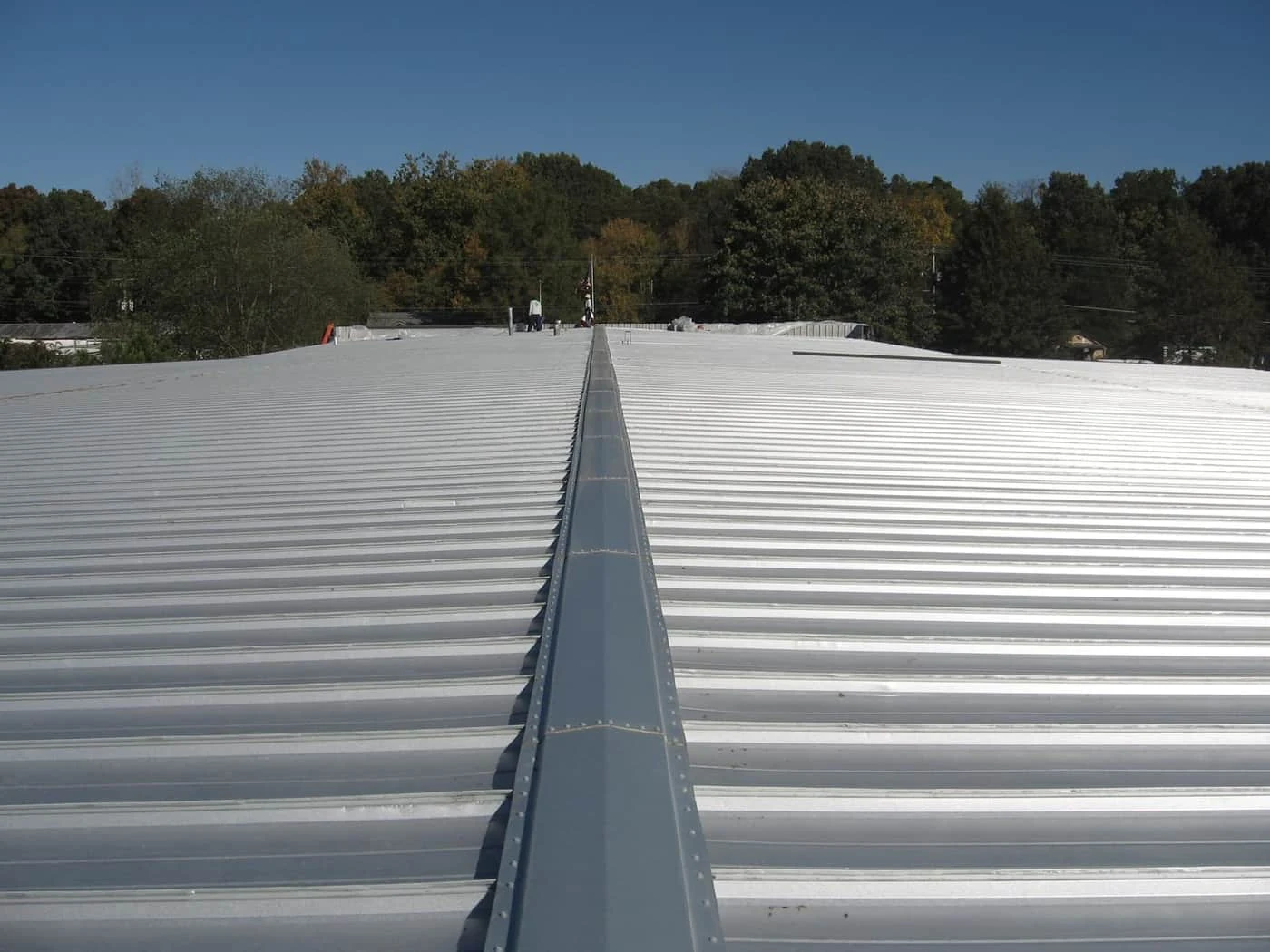
R-Panel Metal Roofing for Ag Buildings and Pole-Barn-Style Structures
R-panel is the exposed-fastener metal system we install most on ag equipment buildings, pole-barn-style structures, and lower-budget commercial buildings across the valley where the application doesn't call for standing seam's added cost. This page covers where R-panel makes sense here and how we manage its known weak point in a high-UV desert climate.
Where R-Panel Earns Its Place
Ag equipment storage and processing-adjacent buildings around the valley's farming areas are the most common R-panel application we see -- structures that need a durable, economical roof over storage or equipment space rather than the finish quality of a standing seam system on an occupied office building. Pole-barn construction and simple metal outbuildings on commercial and light-industrial sites follow close behind.
We also install R-panel on secondary structures at larger properties -- equipment sheds, covered storage, and utility buildings attached to a main facility that doesn't need matching material quality.
The Gasket Problem, and How We Manage It
R-panel's exposed fasteners rely on neoprene washers to seal each screw penetration, and those washers are the system's known weak point everywhere, made worse here by the UV load this valley gets for most of the year. Gaskets that would last comfortably in a milder climate can dry out and crack years sooner under this sun, and a failed gasket is a direct path for water at every single fastener location.
We spec fasteners with UV-stabilized washers rather than standard hardware, and we treat gasket condition as a standing item on any maintenance visit to an R-panel roof, since replacing a handful of washers before they fail costs a fraction of what a widespread leak repair does.
Panel Attachment and Wind Performance
Pre-monsoon wind events and the general exposure of open agricultural and industrial sites both put real load on R-panel attachment. We calculate fastener spacing based on the specific building's height and exposure category, tightening spacing at eave, ridge, and corner zones where uplift pressure concentrates during a wind event.
- Ag equipment storage and processing-adjacent buildings
- Pole-barn and light commercial outbuildings
- Secondary structures at larger industrial properties
- Covered storage and loading canopy roofing
- Budget-driven reroofing on lower-visibility structures
- Utility and equipment buildings attached to a main facility
Repair and Recover on Existing R-Panel Roofs
Most R-panel repair calls we get trace back to failed gaskets, loose fasteners from thermal cycling, or corrosion at cut edges and panel laps. We rework fastener locations with new UV-stabilized hardware rather than simply retightening failing screws into the same worn holes, since retightening alone usually buys only a short delay before the same location fails again.
On roofs with widespread gasket failure across an older panel system, a full refastening pass or a transition to standing seam sometimes makes more sense than chasing individual leaks one at a time. We lay out both options with real cost differences rather than defaulting to the cheaper patch.
Corrosion at panel laps and cut edges is the other recurring issue we find on older R-panel roofs, especially where a panel was field-cut without properly sealing the exposed edge. Left alone, that corrosion spreads along the lap and eventually compromises the seal well beyond the original cut.
Coordinating Work on Working Ag Sites
Ag processing schedules run on their own calendar tied to harvest and processing seasons, and we plan roof work around that rather than around our own convenience. Equipment access and material staging get worked out with the site operator ahead of time, since a blocked loading area during processing season costs more than most roof problems do.
Dust from surrounding fields and unpaved lot access is another constant on ag sites that a downtown crew doesn't have to think about. We factor cleanup and equipment protection into the schedule on those jobs rather than treating it as an afterthought once the panels are already on the ground.
Property owners running multiple ag or storage structures on one site often ask us to inspect the whole group at once rather than one building at a time, and we're glad to do it -- a single visit that catalogs gasket condition and fastener wear across several structures gives the owner one prioritized list instead of piecemeal repair calls spread across the year.
We also check for interior condensation staining under R-panel roofs during inspections, since a poorly ventilated equipment building can trap moisture against the panel underside even when the exterior roof shows no obvious sign of a leak.
Common Questions About R-Panel
Why does R-panel leak more than standing seam over time?
Exposed fasteners and their neoprene gaskets are the weak point, and gaskets degrade faster under this valley's UV exposure than in a milder climate. Standing seam avoids that failure point with concealed attachment.
Is R-panel a bad choice for this climate?
Not for the right application. It's a durable, economical system for ag and utility buildings when fastener hardware and maintenance are handled correctly -- the tradeoff is more maintenance attention than standing seam requires.
How often should R-panel fasteners be checked?
We recommend annual inspection at minimum, more often on buildings with a documented gasket failure history or heavy sun exposure.
Can you refasten an existing R-panel roof instead of replacing it?
Often, yes, if the panels themselves are sound and corrosion is limited. Refastening with UV-stabilized hardware can extend service life meaningfully.
Do you install R-panel on occupied commercial buildings?
Yes, though for occupied office or retail space we typically recommend standing seam given its lower long-term maintenance demand.