
- Home
- Commercial Roofing Services
- PVC Roofing in Las Cruces, NM
Commercial Roofing Services
PVC Roofing in Las Cruces, NM
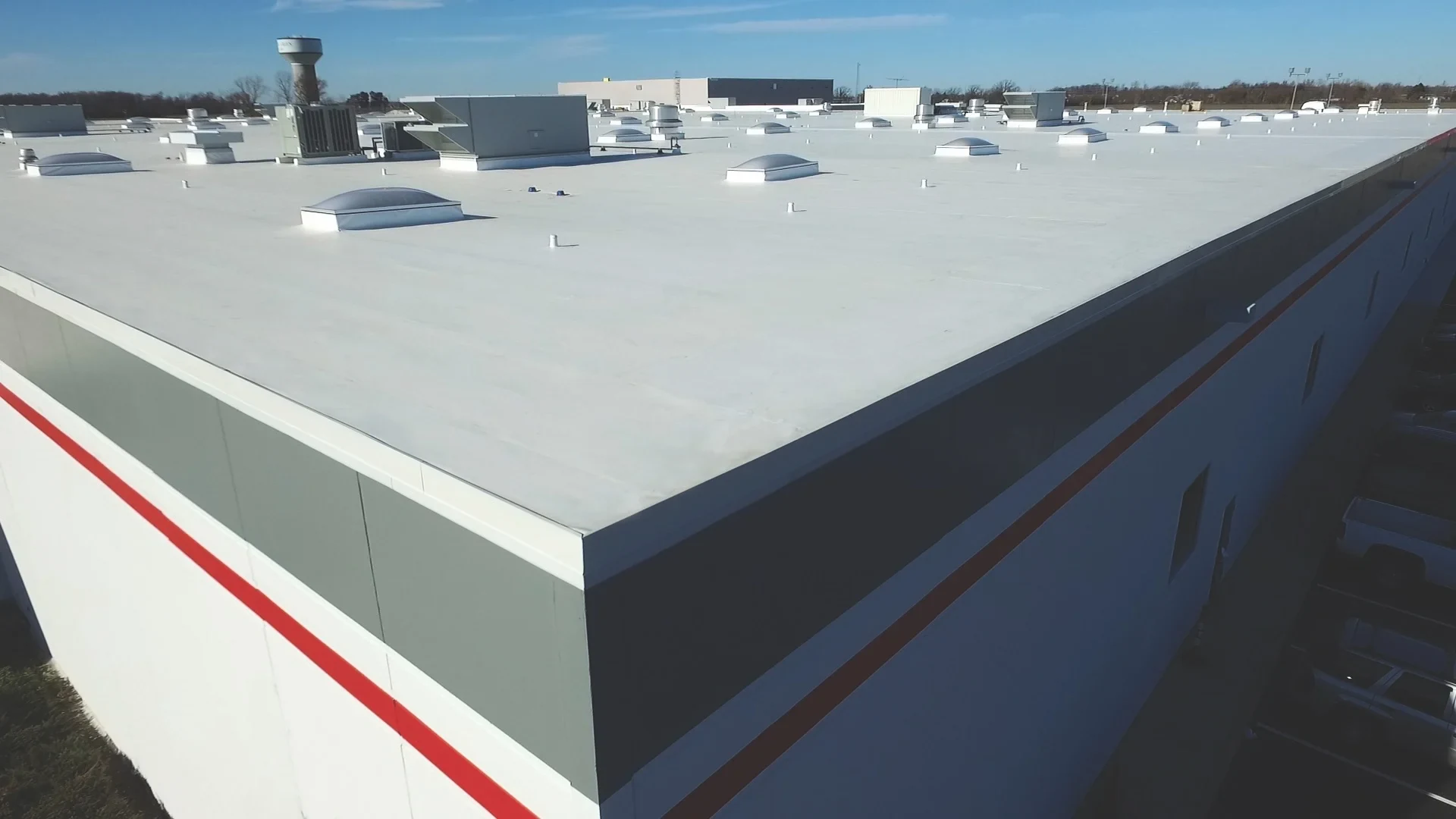
PVC Membrane for Roofs That See Grease, Chemicals, or Ag Dust
PVC is the roof we reach for when a building's rooftop exhaust carries something a standard membrane can't handle -- grease from a restaurant kitchen, chemical residue from a processing operation, or the heavy dust load that some ag facilities put through their exhaust systems. This page covers where PVC earns its higher cost around Las Cruces and how we detail it.
Why Chile and Ag Processing Buildings Come Up First
This valley runs a real ag processing economy, and roof-mounted exhaust from chile roasting, pecan processing, and related operations can put grease and organic residue directly onto a membrane surface. TPO's heat-welded seams are strong, but the material itself doesn't resist grease and oil the way PVC does. On a processing building where exhaust discharges anywhere near the roof surface, we default to PVC rather than waiting for a failure to make the case for us.
Restaurant and food-service buildings around the university and downtown carry the same exposure at a smaller scale -- kitchen exhaust that vents onto or near the roof deck degrades a standard membrane faster than most owners expect.
Chemical and Fuel Exposure Elsewhere in the Valley
Distribution buildings along the West Mesa corridor sometimes handle chemical or fuel-adjacent freight, and fleet maintenance facilities near the freight corridors run equipment that can put petroleum residue on a roof surface during servicing. PVC's resistance to oils and solvents makes it the more durable choice on those buildings even though the material itself costs more upfront.
We also spec PVC on buildings with rooftop generators or fuel storage, where a fuel spill onto the membrane is a realistic scenario the roof needs to survive without losing integrity.
Property managers overseeing multiple buildings around the valley sometimes ask why one building on their portfolio gets a PVC quote while a nearly identical one down the street gets TPO. The answer almost always comes back to what's discharging onto that specific roof, not the building type on paper.
We also see the question come up when a building changes tenants -- a warehouse that switches from general storage to a food-grade or chemical-adjacent use suddenly has a roof exposure it wasn't designed for. We factor current tenant use into the material recommendation rather than relying on the building's original construction alone.
How PVC Performs Under This Sun
PVC membranes hold reflectivity well under sustained UV exposure, which matters in a market where the sun load is intense for most of the year. Heat-welded seams give the same reliable, testable seam integrity that makes TPO a strong performer during monsoon downpours, so switching to PVC for chemical resistance doesn't mean giving up weathertightness.
- Restaurant and food-service kitchen exhaust zones
- Chile roasting and pecan processing buildings
- Fleet maintenance and fuel-adjacent facilities
- Buildings with rooftop generators or fuel storage
- Chemical or industrial distribution warehouses
- Any roof with a documented history of grease staining
Detailing Penetrations on Processing Buildings
Ag and food processing roofs tend to carry more roof penetrations than a standard office building -- exhaust stacks, refrigeration lines, dryer vents, and access hatches all punch through the membrane. We detail each one individually with PVC-compatible flashing rather than relying on generic pipe boots, since a generic detail is usually the first place a grease-exposed roof fails.
We also talk with facilities teams about exhaust discharge points before we finalize a scope, because relocating or redirecting an exhaust outlet a few feet can meaningfully extend the life of the membrane around it.
Refrigeration and cold-storage lines running across a roof deck add another layer of detailing, since condensate drainage and line penetrations both need attention separate from the exhaust-related work. We map every line run before we finalize flashing details rather than working around them as they come up mid-install.
Seasonal spikes matter too. Chile roasting runs a concentrated calendar over a few weeks each year, and a processing facility with roof work planned needs that timeline coordinated well ahead of the season rather than scheduled around whatever week our crew happens to be free.
Coordinating Work Around an Active Processing Line
Processing buildings rarely shut down for a roof project, and seasonal ag processing runs on its own calendar that doesn't move for construction schedules. We plan PVC installation and repair work around production shifts, keep material and equipment staging away from active loading and shipping areas, and prioritize sealing any open section before an afternoon monsoon cell builds.
Questions About PVC in This Market
Is PVC always the right call for a processing building?
Not automatically. We look at what's actually venting onto the roof and how much exposure the membrane sees before recommending PVC over a lower-cost option.
How does PVC compare to TPO on cost?
PVC typically costs more than TPO. We recommend it specifically where chemical, grease, or fuel exposure justifies the added cost rather than as a default choice.
Can PVC be installed over an existing roof?
In many cases, yes, if the existing substrate is sound. We assess that during the walkthrough the same way we would for any recover project.
Does PVC hold up to the UV load here as well as TPO?
Yes, PVC maintains reflectivity and seam integrity well under sustained sun exposure, which is part of why it performs well in this climate despite its different chemistry.
What if only part of our roof has grease exposure?
We can detail a PVC zone around the affected exhaust area with a different membrane on the rest of the roof, rather than requiring one material across the whole building.